Skip to content

Industry & testing

Find the source of a noise, even a brief one

Diagnose machines, characterize sound emissions, monitor a site: rugged, modular arrays at a cost that lets you deploy them widely.

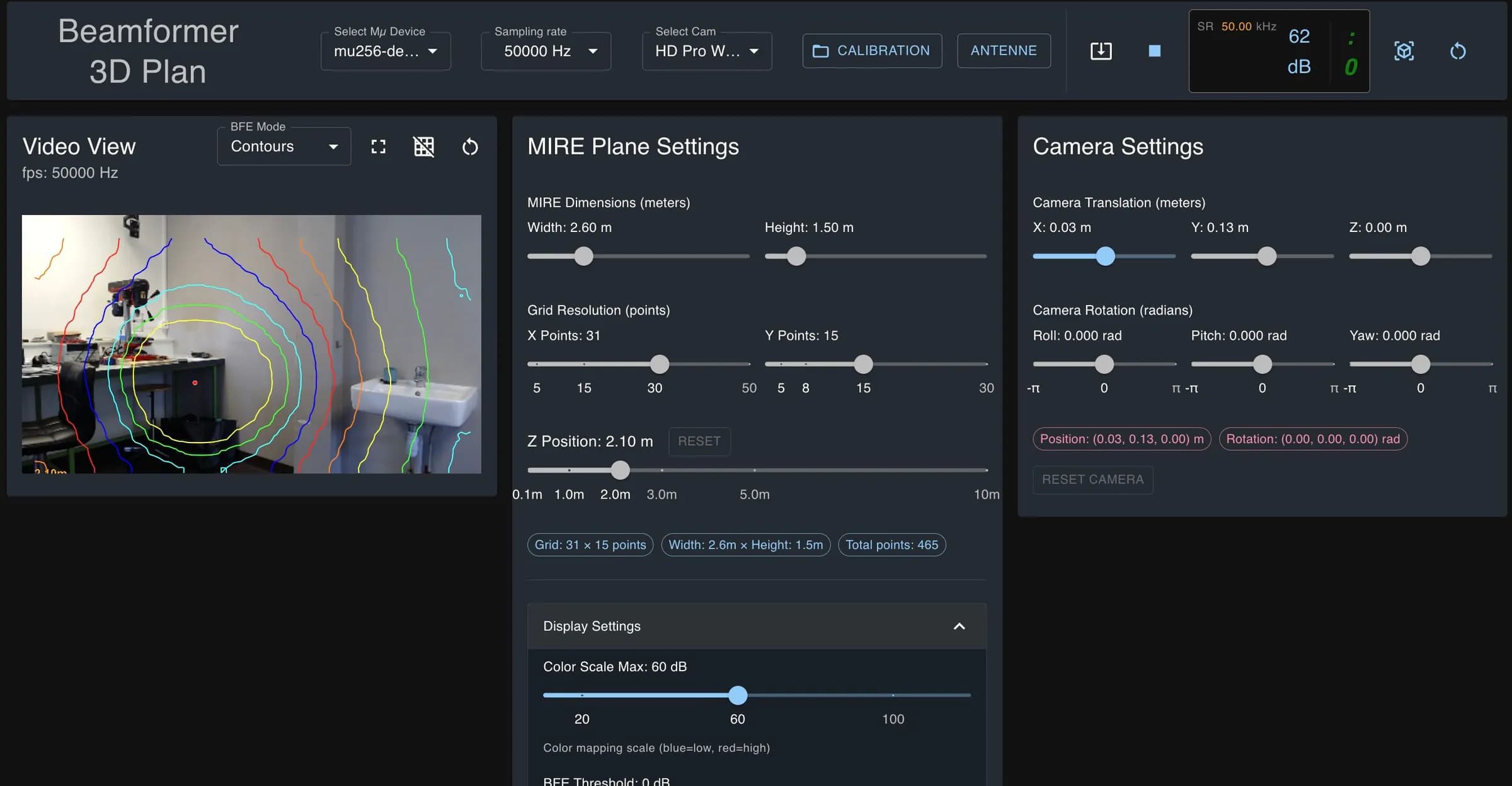
MµBoard: beamforming map overlaid on the video

What holds acoustic imaging back in industry

01

A tool for specialists only

Acoustic imaging systems are expensive and demand deep expertise, so they are used only occasionally, rented or through a service provider.

02

Low frequencies

Ventilation, rotating machinery: locating low frequencies calls for large arrays.

03

Short-lived noises

Knocks, start-ups: a brief or intermittent event easily slips through the measurement.

Capture the moment

Every channel records continuously: a brief noise no longer slips through, and its origin can be read from the delays between microphones.

  1. Record continuously

    Every channel of the array is acquired without interruption, in perfect synchronization.

  2. Catch the knock

    The noise reaches each microphone with a slight delay: that delay gives away its direction.

  3. Locate the source

    Beamforming traces the noise back to its origin on the machine.

What Mµ brings

A whole machine in one shot

Large synchronous arrays measure the entire piece of equipment at once, instead of scanning it point by point.

Ready for the field

Weatherproof arrays, optional integrated camera, remote control and networked arrays for continuous monitoring.

No brief noise missed

Every channel records continuously, so transient events are captured.

Open signals

Raw signals and a Python SDK: your analyses stay yours, with no black box.

A cost that scales

About 10× cheaper per channel than a condenser-microphone system: enough to equip several sites.

Use cases

Acoustic emissions from vehicles and large equipment: generator sets, engines, pumps

Diagnosing unwanted noises

Acoustic monitoring of sites and construction works

Capturing transient events: knocks, start-ups

Rail: detecting faults as trains pass by

Scope of use: localization and diagnostics. Mµ arrays are not a substitute for regulatory measurements.

Projects

Arrays deployed on vehicles, on construction sites and in the heart of the city.

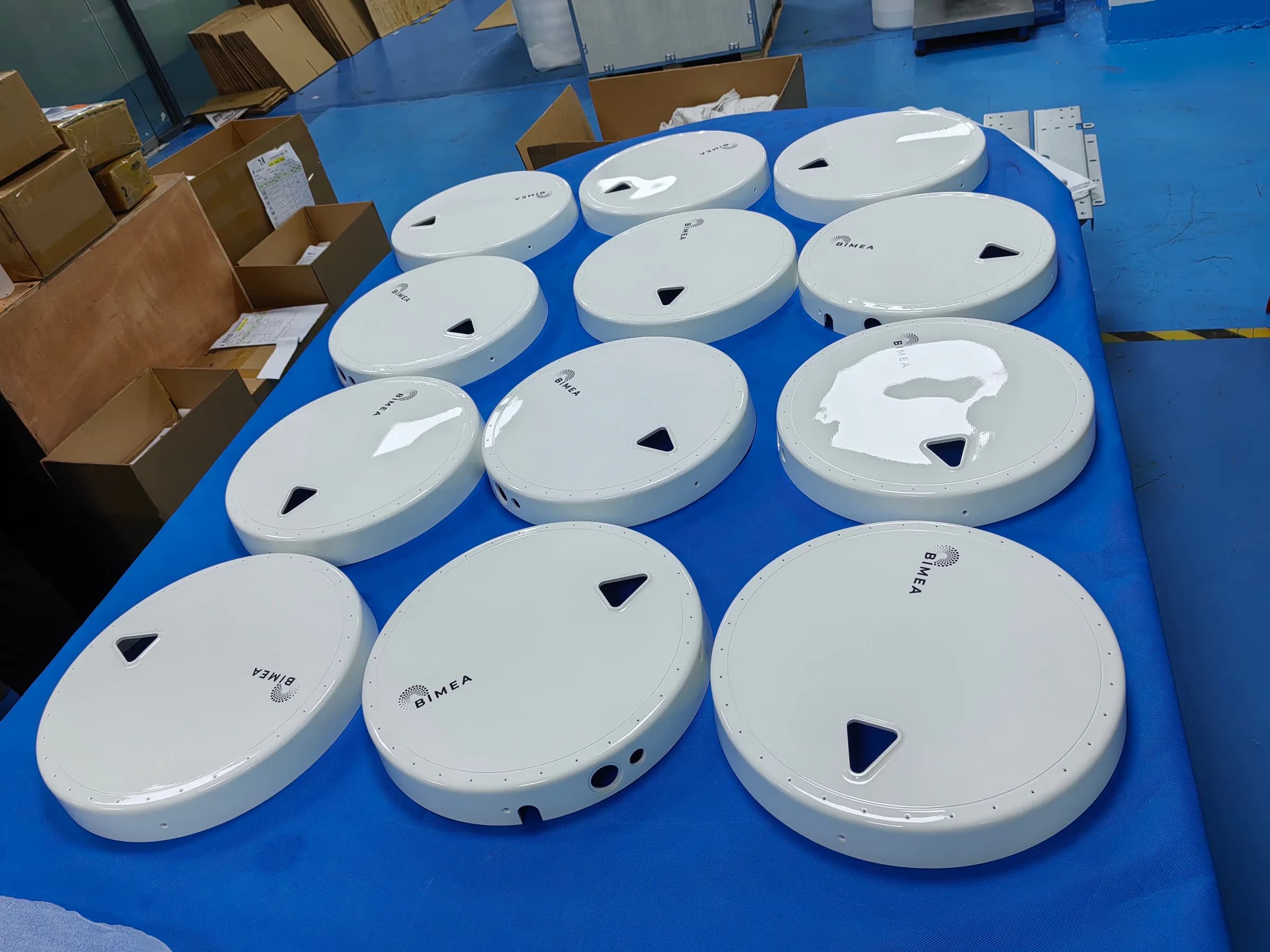
Around ten array housings being assembled

R&D partnership

Custom arrays to measure vehicles and machinery

Context
A research and development partnership with CETIM, the French technical centre for mechanical industries.
Need
Measure the acoustic emissions of vehicles and machinery.
Mµ solution
Several custom-designed arrays.
Result
A system chosen for its access to the code and raw signals.
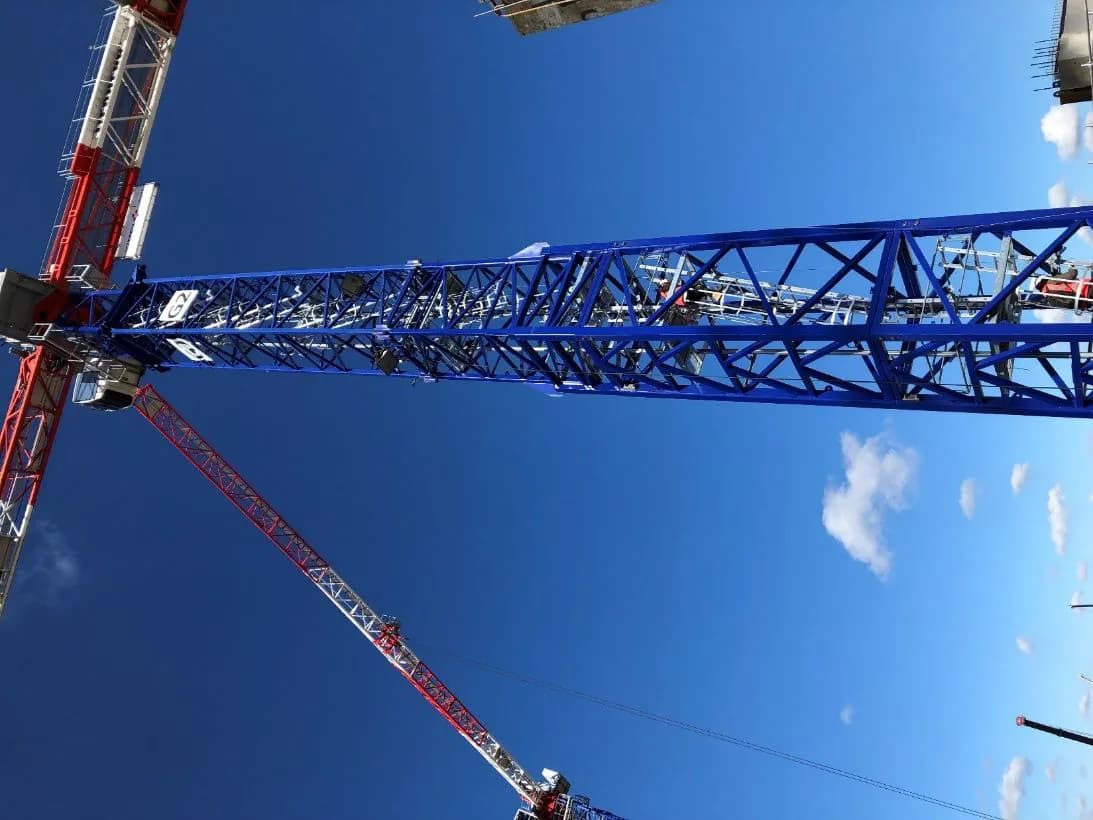
Acoustic array installed on a construction crane

2019 · Proof of concept

Acoustic monitoring of an urban construction site

Context
A major construction site in the city.
Need
Spot and recognize the sound events on the site.
Mµ solution
A linear array mounted on a crane, 40 m above the ground.
Result
A proof of concept for locating and automatically recognizing sound events.
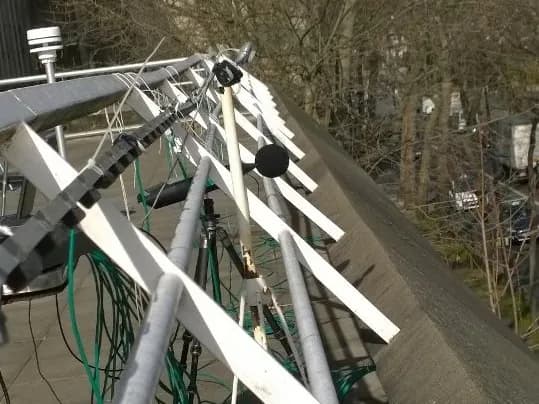
Large linear array installed outdoors, beside a road

2015-2018 · MOUVIE research chair

Diagnosing urban noise annoyance

Context
A research chair dedicated to noise annoyance in cities.
Need
Automatically extract and classify road-traffic noise sources.
Mµ solution
A 20 m linear array along the Quai Saint-Bernard in Paris.
Array
128 microphones
Result
Automatic extraction and classification of noise sources.

Typical setup

Mµ256 or Mµ1024

256- or 1,024-channel synchronous concentrator

Large array or weatherproof version

Sized to the machine, or ready for outdoor use

Remote control

One or more arrays operated as a network

See the range

See also

Got a noise to track down?

Describe your machine or site: we will suggest a setup and send you a quote.