Design and implementation of a multi-octave-band audio camera for realtime diagnosis (opens in a new tab)
C. Vanwynsberghe et al. — Applied Acoustics 89, 2015
Megamicros technology
Digitize sound right at the sensor, synchronize hundreds of channels, deliver open raw data.
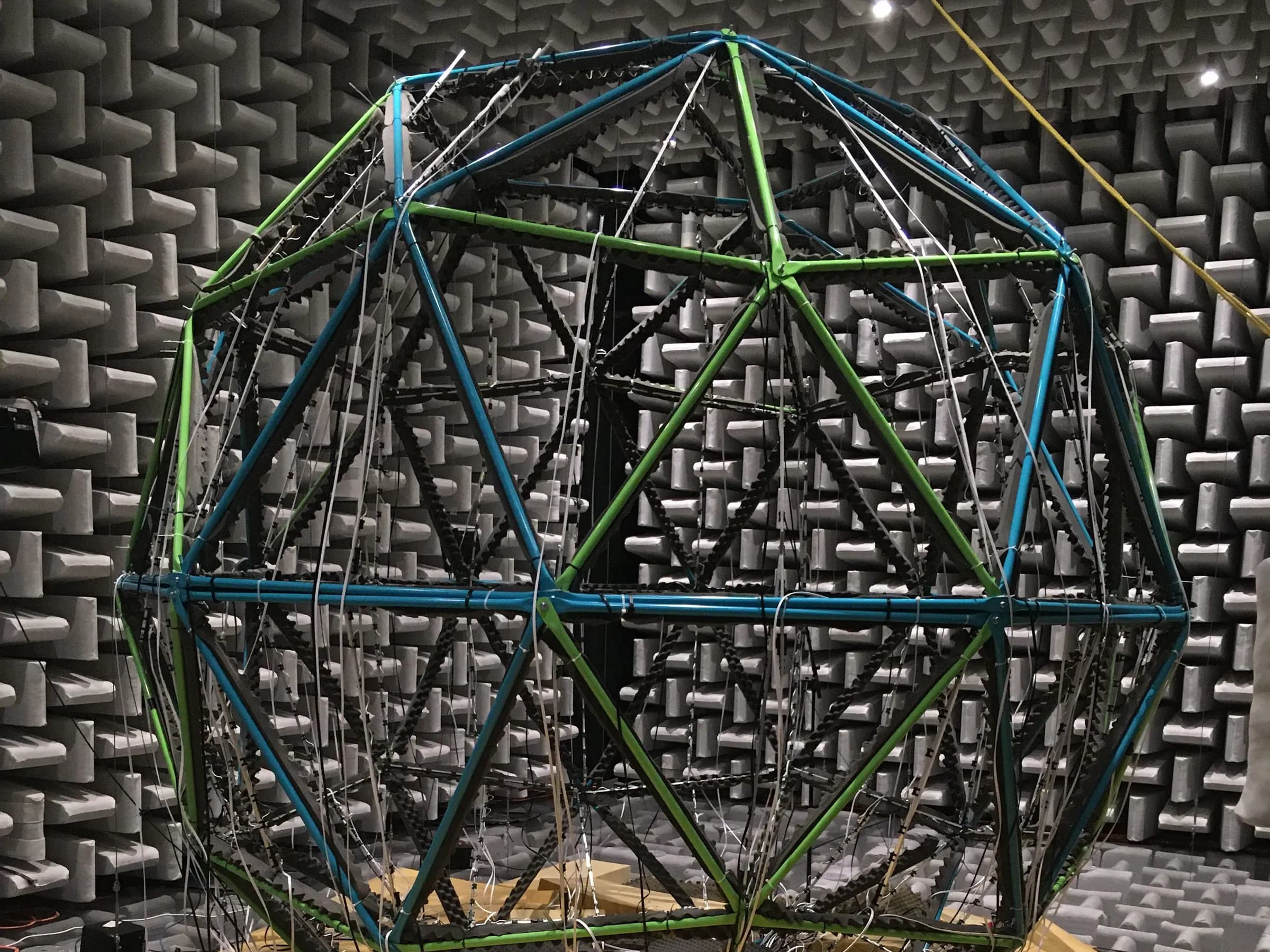
Three criteria determine the quality of an acoustic image.
It improves with the array's aperture: large arrays are what reach low frequencies.
It improves with the number of microphones: the source stands out from the background noise.
It decreases with microphone density, pushing back the high-frequency limit.
So you need many microphones over a large area. With conventional microphones, that is bulky, expensive and hard to maintain: this is the barrier Mµ removes.
Capture, locate, identify: we master every link.
01
Built-in converter: the digital output is robust to noise and can be carried over long distances. Mass-produced, the microphones offer consistent performance.
02
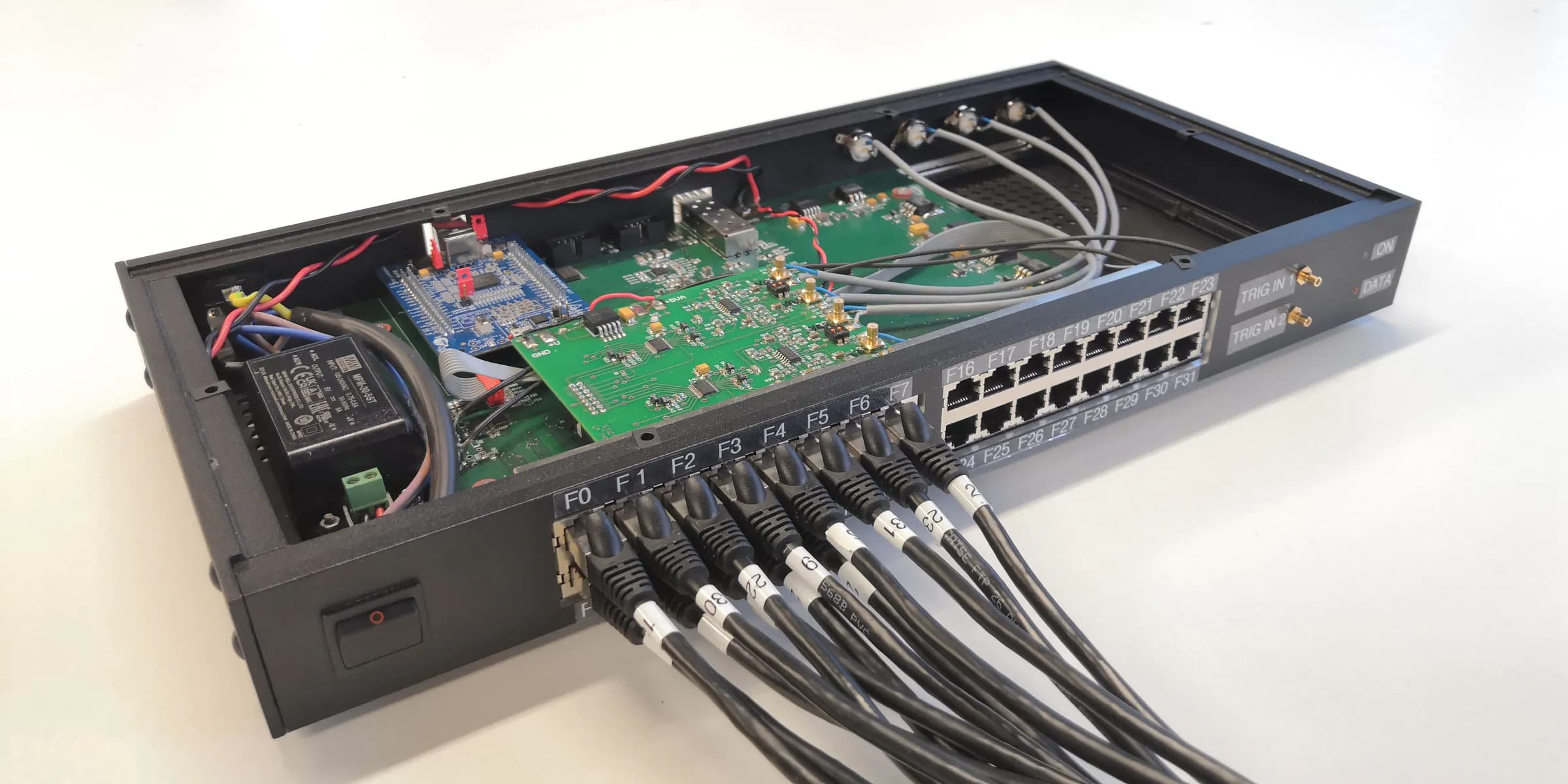
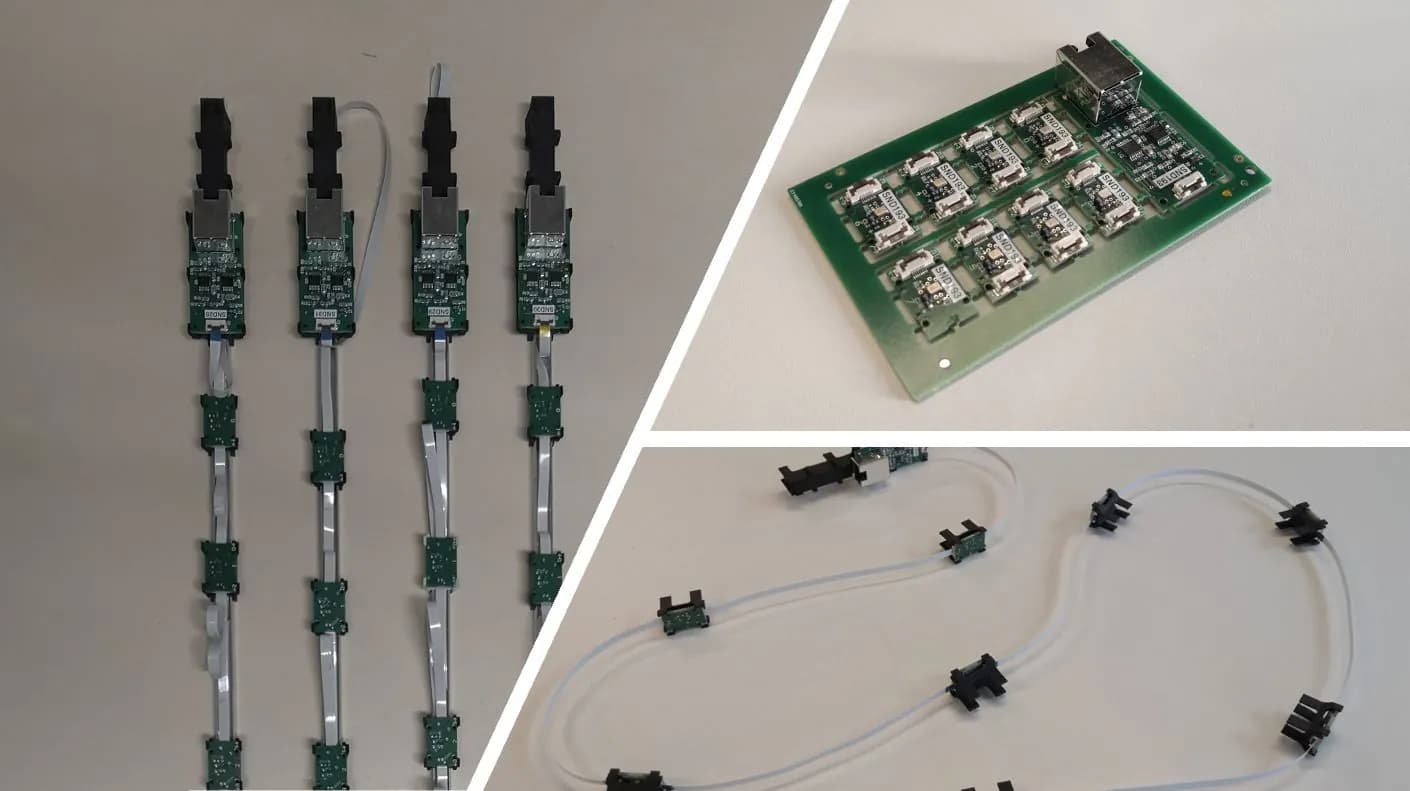
8 microphones per standard RJ45 cable, from 30 cm to 10 m. Quick to wire, quick to reconfigure.
03
Synchronous acquisition of every channel, compensating for each module's cable length. Analog channels and external trigger kept in sync, a single USB 3 link to the PC.
04
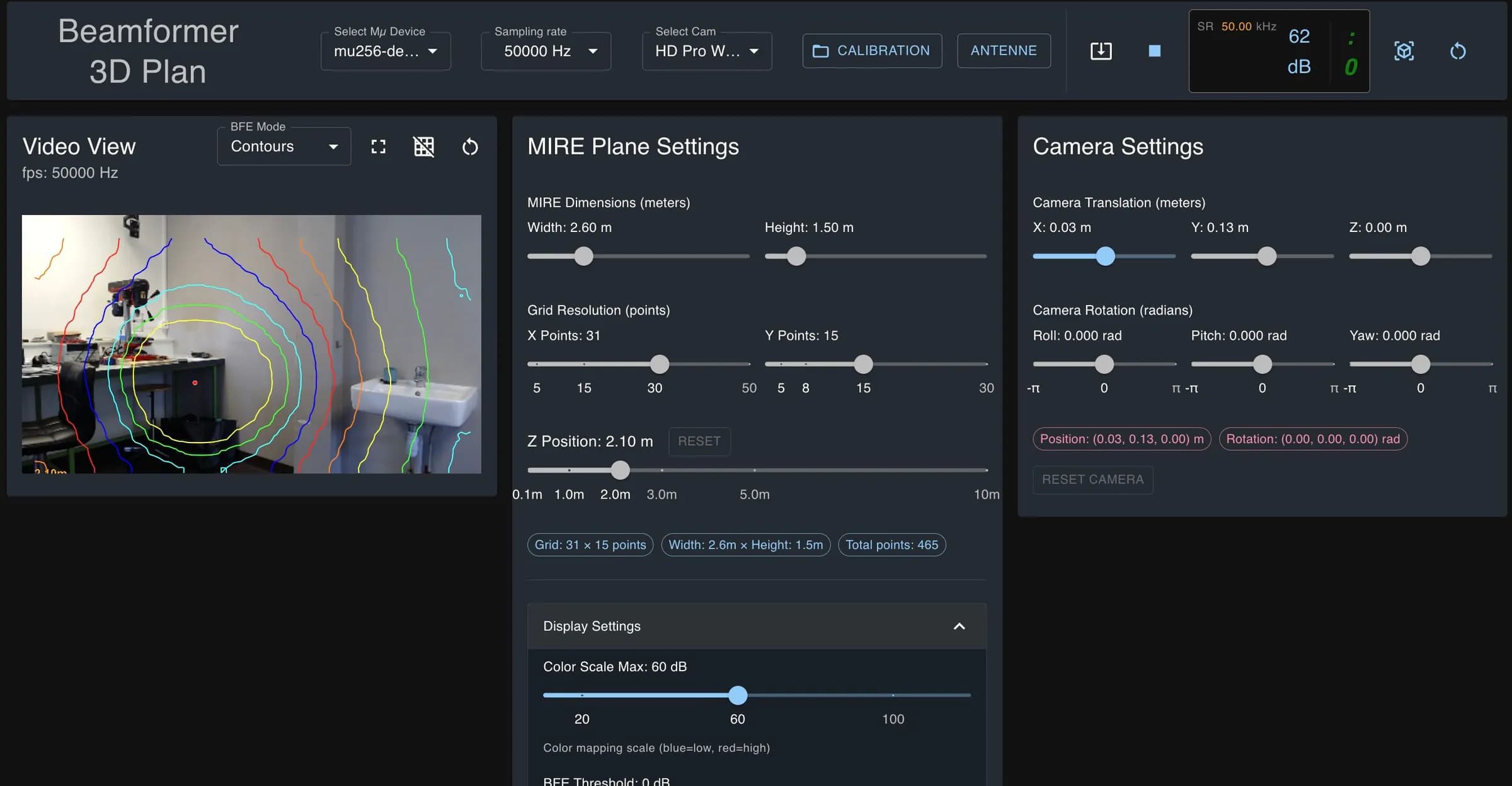
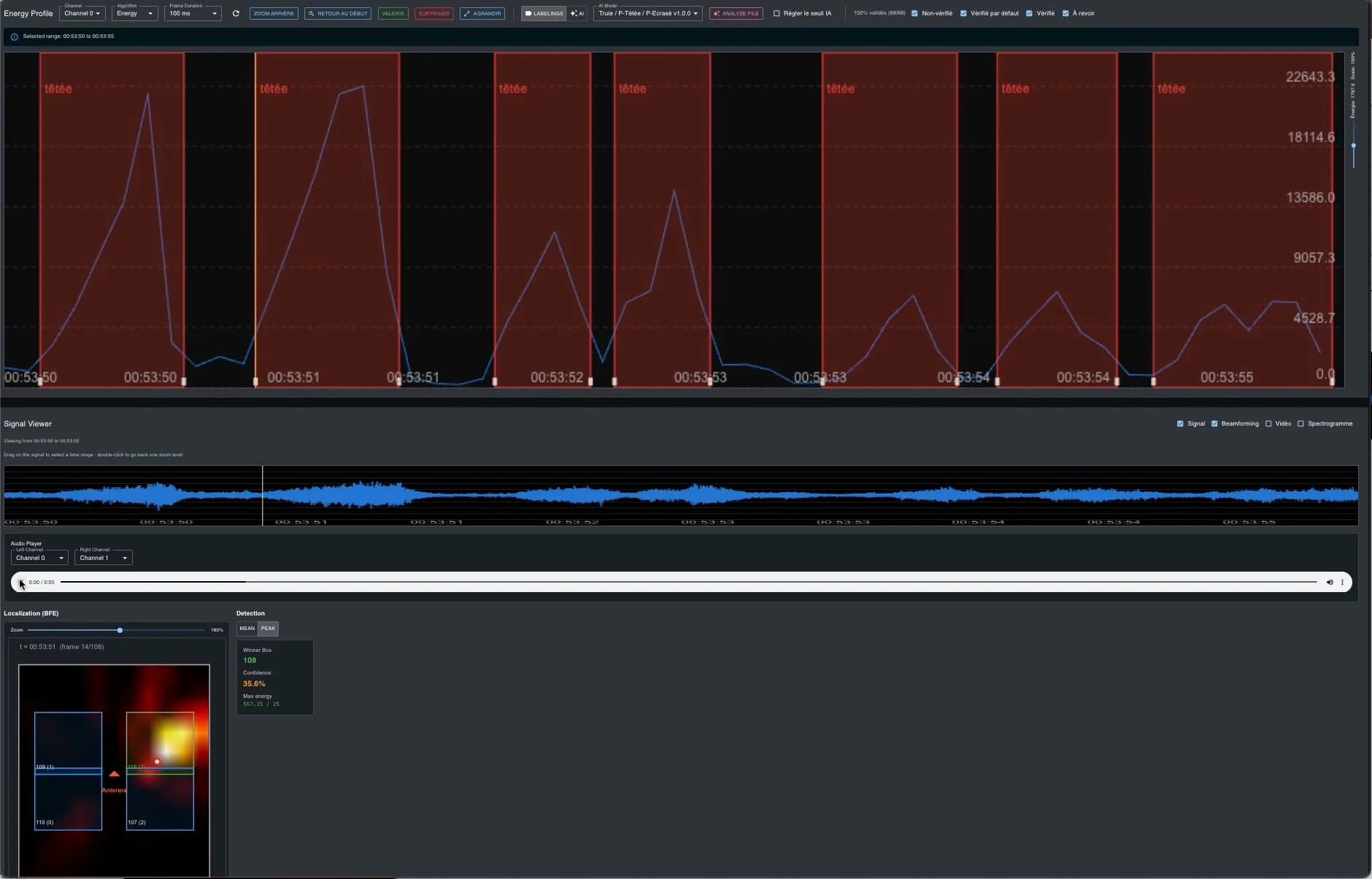
MµBoard to acquire, visualize and locate; the Python library for your own processing.
Acquisition stays synchronous over long distances: arrays spanning up to about 20 m, covering more than 40 m² or several m³. Essential for low frequencies.
Access to raw signals, an open recording format, a Python SDK and an adjustable sampling rate. Unlike the closed systems on the market, you stay in control of your processing.
The same building block — the 8-microphone module — serves every geometry, from 8 to 1,024 channels. An array gets reconfigured rather than replaced.
Synchronized multichannel data, with video when needed, feeds straight into your machine learning pipelines. Arrays can be embedded and networked. Application-specific models under development.
| Channel count | 8 to 1,024, in steps of 8 |
|---|---|
| Frequency range | 80 Hz – 25 kHz |
| Bit depth | 24-bit |
| Sampling rate | adjustable from 10 kHz to 50 kHz |
| Synchronization | all channels synchronous, < 1 µs |
| Module cables | RJ45, 30 cm to 10 m |
| Max. aperture | ~20 m |
| PC link | USB 3 |
| Analog channels | 2 (Mµ32, optional) · 2 (Mµ64) · 4 (Mµ128, Mµ256) · 16 (Mµ1024) |
| Software | Windows, Linux, macOS |
| Formats | open binary (Matlab, Python) |
Intended use: source localization and characterization (diagnostics).
Megamicros builds on about ten years of research at the Institut Jean le Rond d'Alembert (Sorbonne University, CNRS).
C. Vanwynsberghe et al. — Applied Acoustics 89, 2015
C. Vanwynsberghe et al. — The Journal of the Acoustical Society of America 139, 1252, 2016