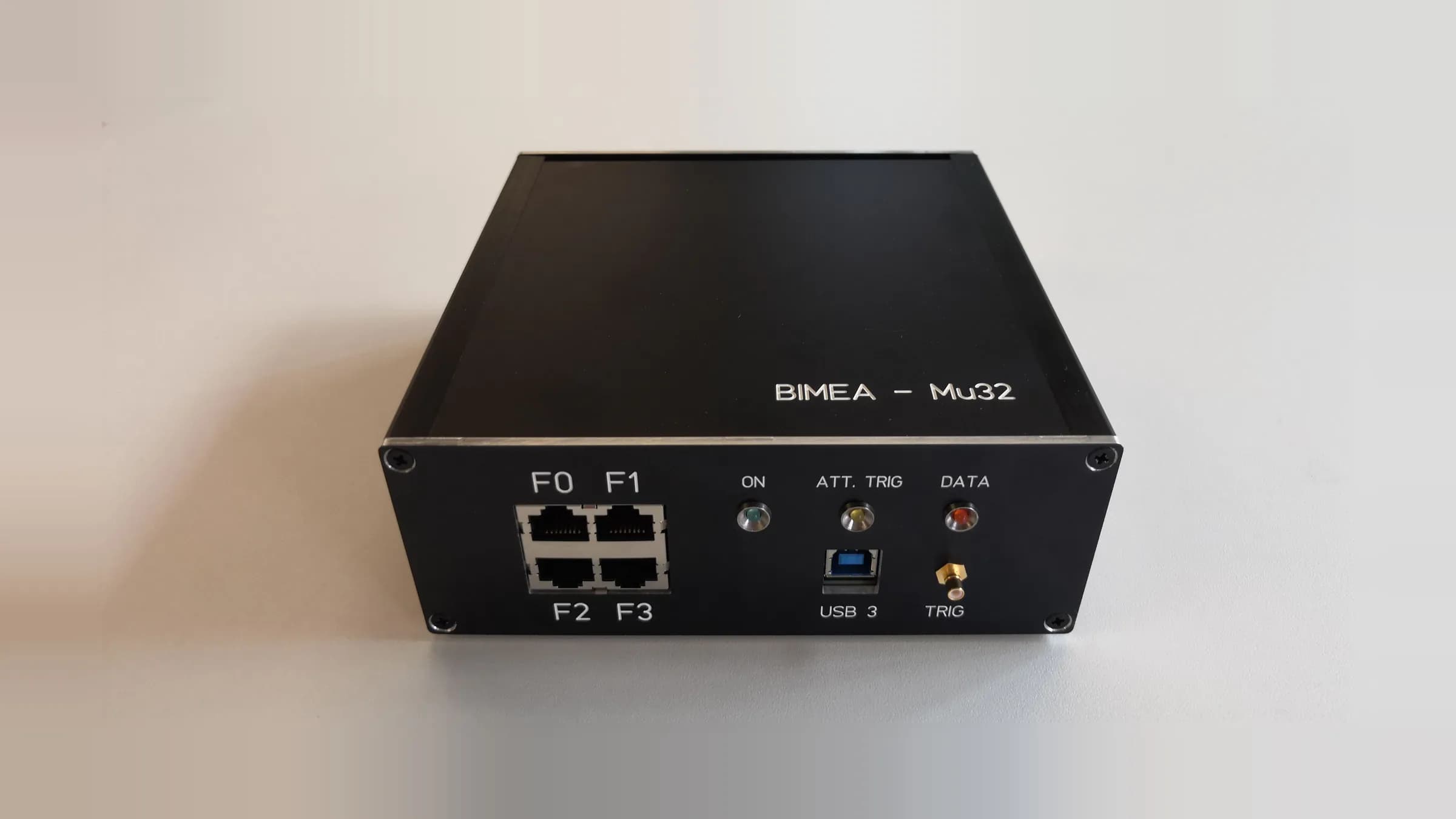
Mµ32
8 to 32 synchronous channels
- Compact, USB 3 link
- Software and external trigger
- 2 optional analog channels
From €4,160 excl. VATcomplete package, education & research pricing
Request a quote — Mµ32Megamicros (Mµ)
Not a single array, but a family of configurable systems, from 8 to 1,024 synchronous channels. The same building blocks — MEMS microphones, modules of 8, FPGA concentrator, software — to build the array your project calls for.
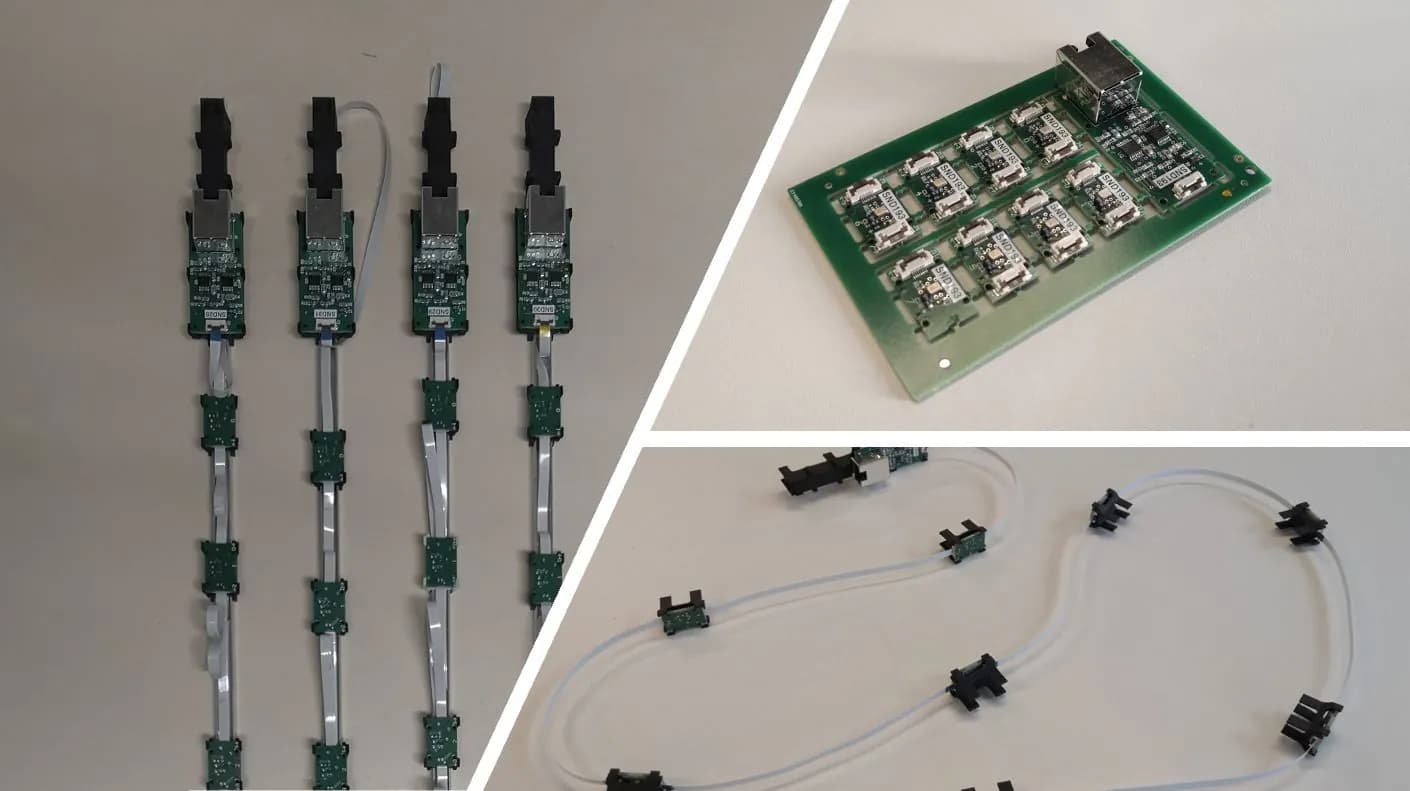
Each module carries 8 digital microphones on a standard network cable. The concentrator acquires them all synchronously and streams everything to the PC over a single cable.
Each concentrator sets the maximum channel count. The geometry is up to you.
32 channels · 4 modules
64 channels · 8 modules
128 channels · 16 modules
256 channels · 32 modules
1,024 channels · 128 modules
One concentrator per array size, delivered as a complete package.
Everything you need to build an array and run your first acquisitions: concentrator, RJ45 and USB 3 cables, MEMS microphones mounted in modules, MµBoard software and Python library.
From €70 excl. VAT per channeleducation & research pricing, complete package · industry: quote on request
8 to 32 synchronous channels
From €4,160 excl. VATcomplete package, education & research pricing
Request a quote — Mµ32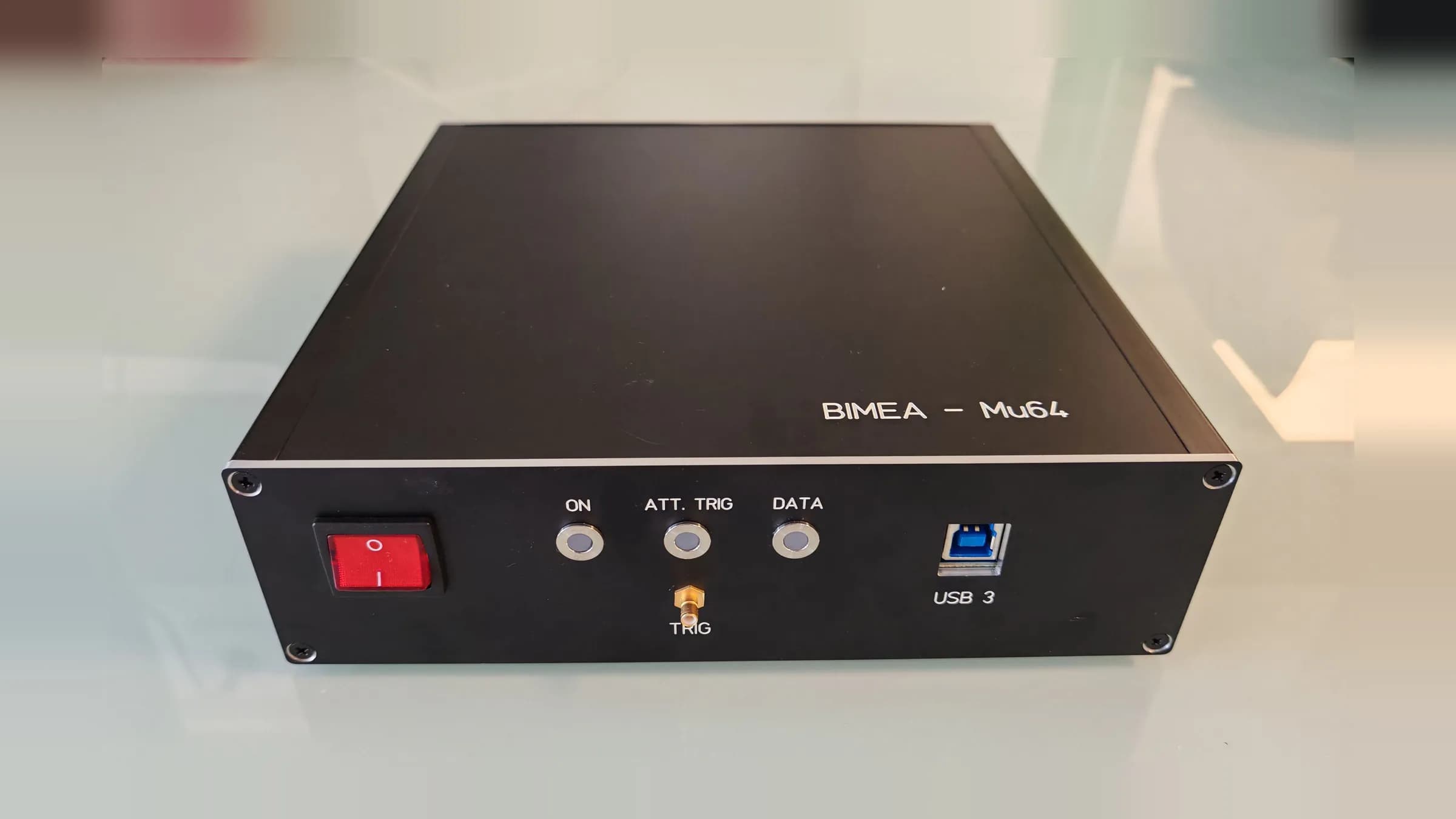
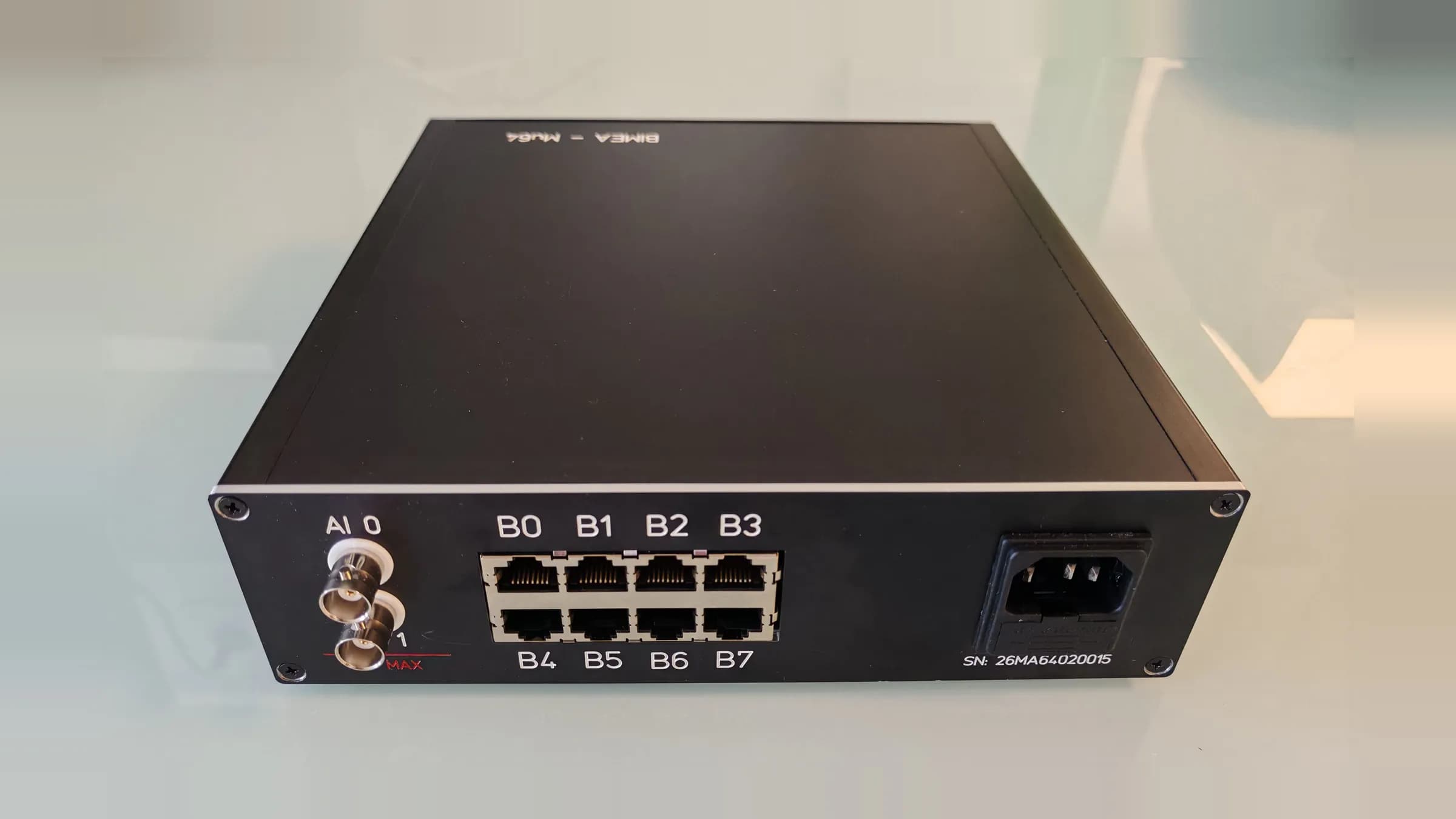
up to 64 synchronous channels
From €7,488 excl. VATcomplete package, education & research pricing
Request a quote — Mµ64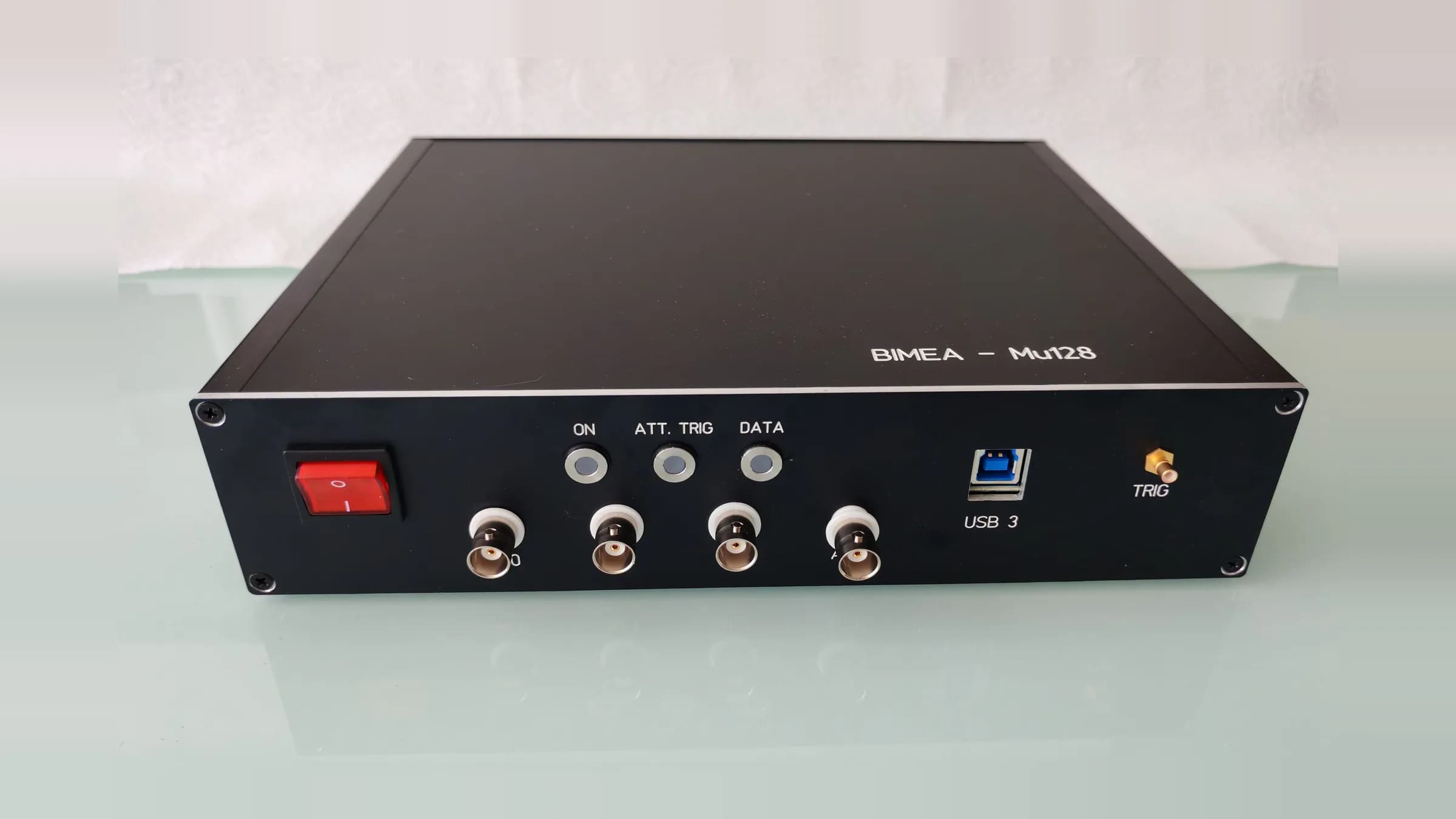
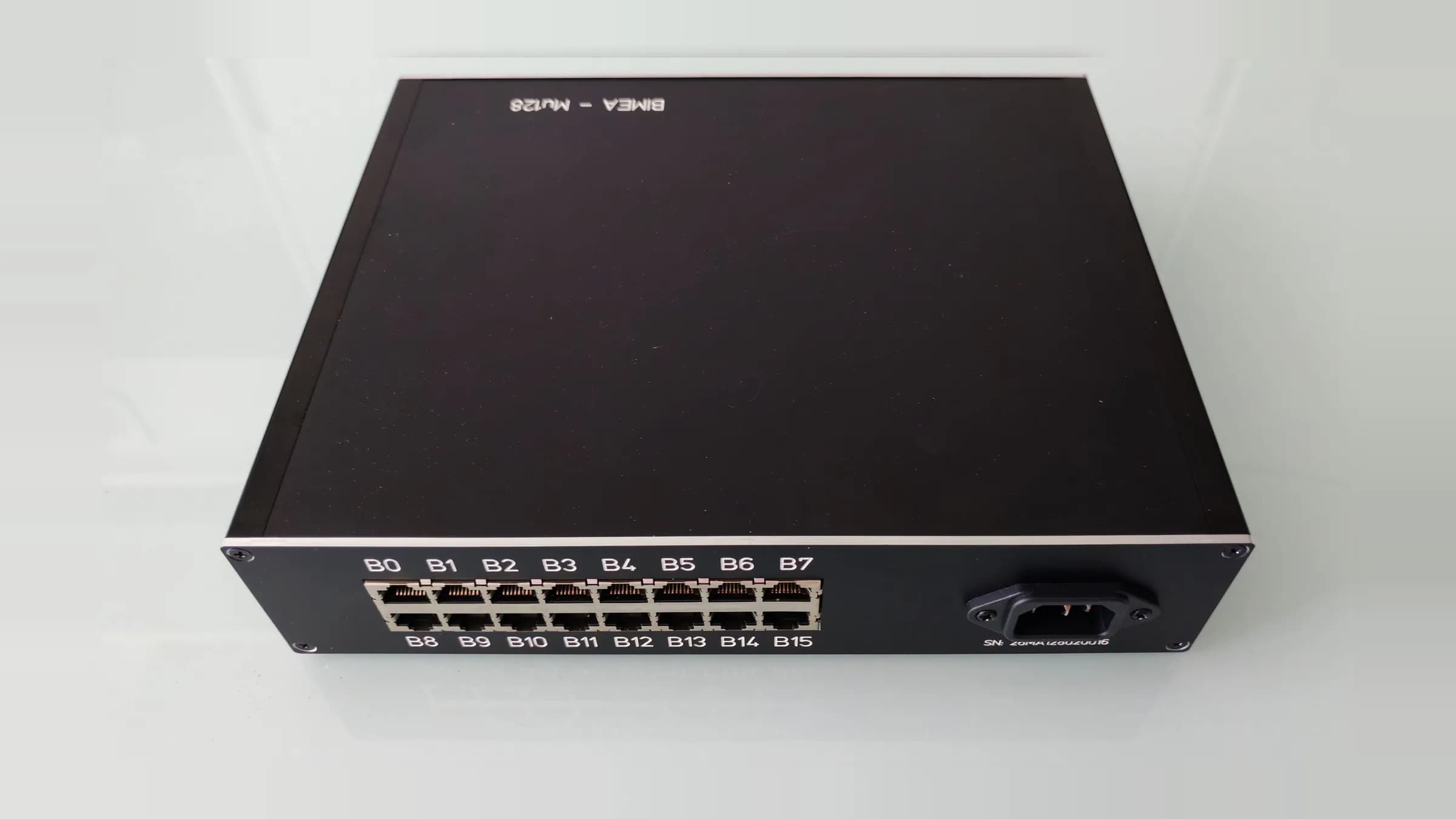
up to 128 synchronous channels
From €13,440 excl. VATcomplete package, education & research pricing
Request a quote — Mµ128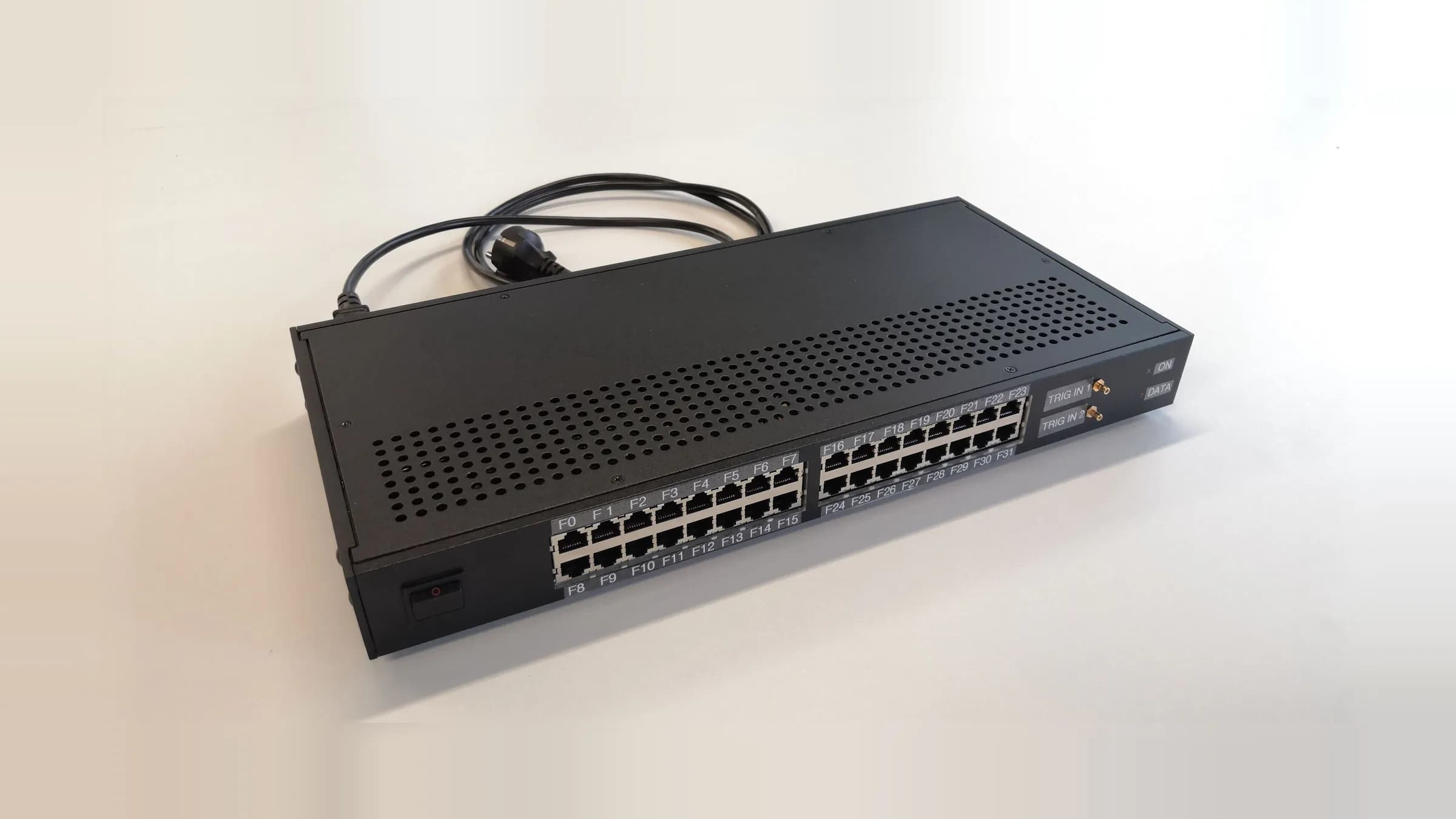
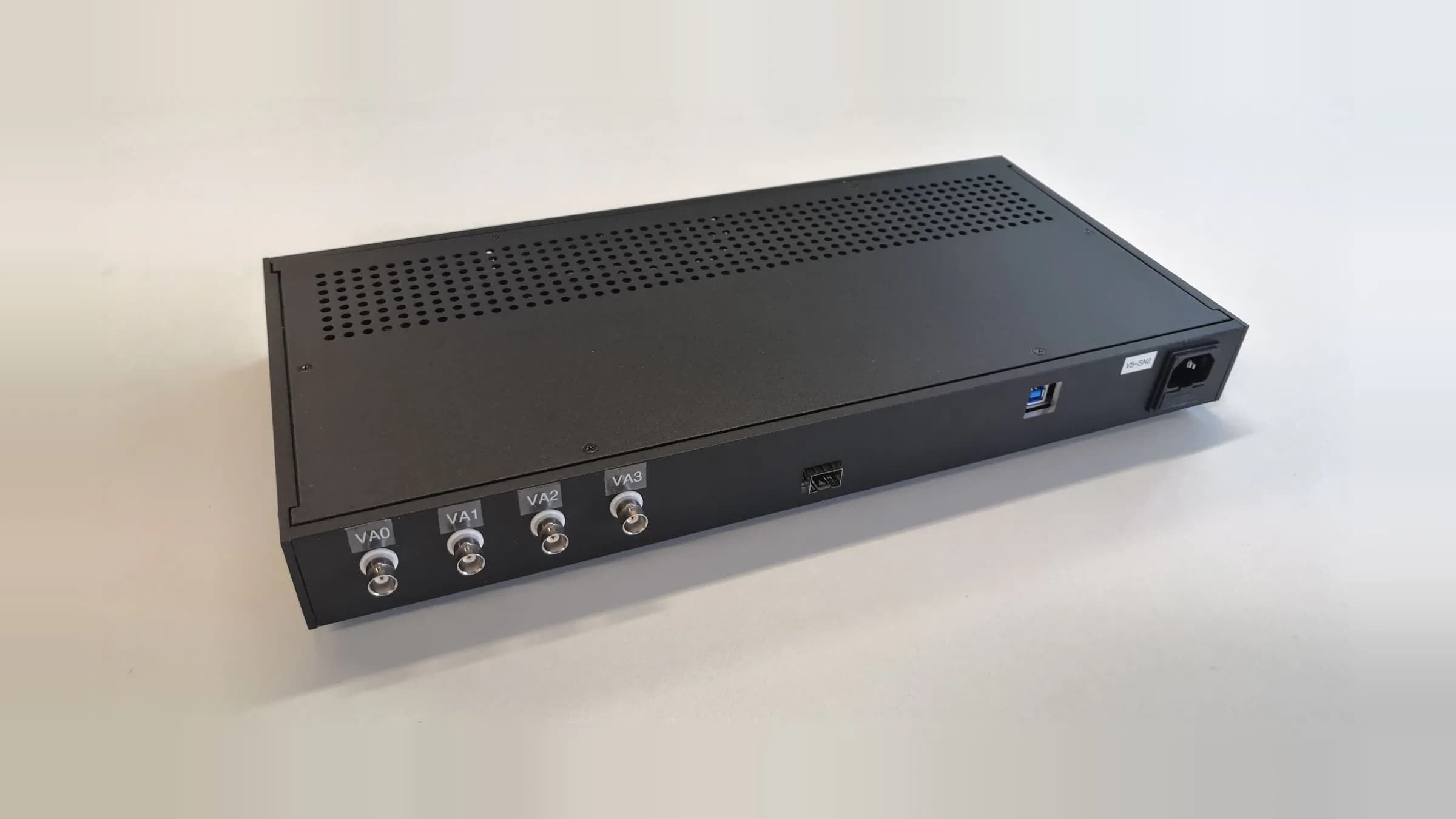
up to 256 synchronous channels
From €23,808 excl. VATcomplete package, education & research pricing
Request a quote — Mµ256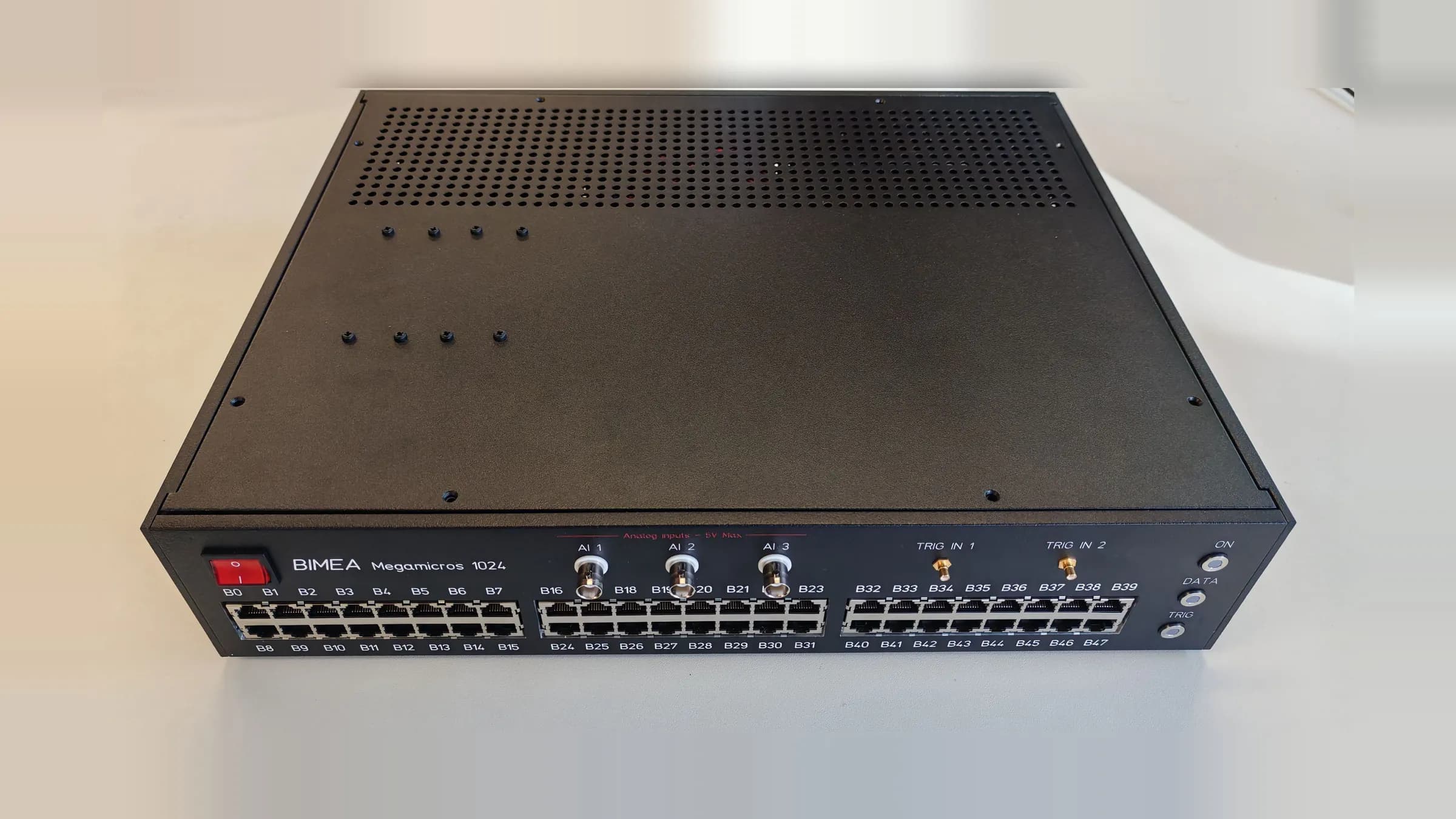
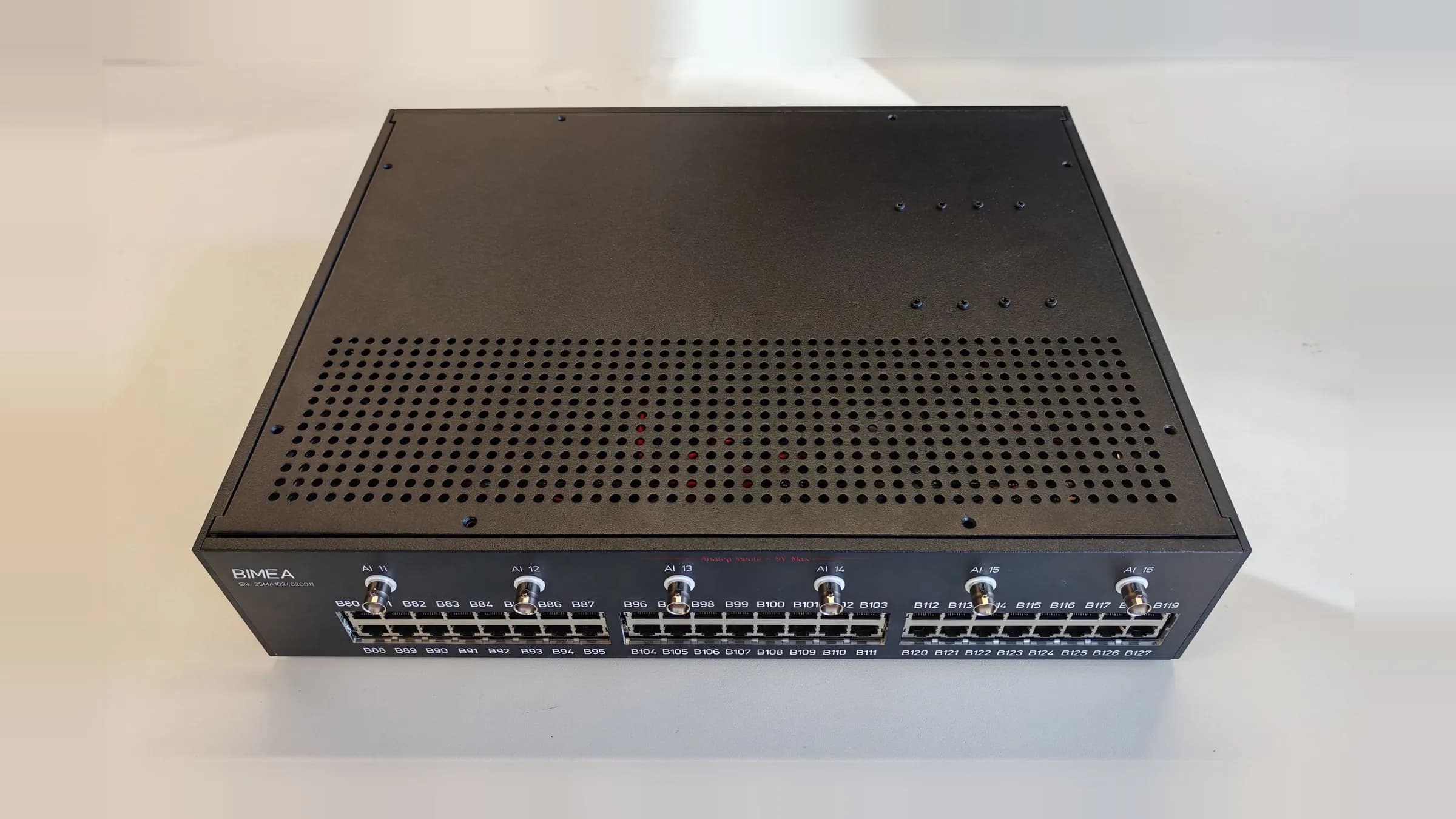
up to 1,024 synchronous channels
From €71,680 excl. VATcomplete package, education & research pricing
Request a quote — Mµ1024512 channels: on request. Beyond 1,024 channels or for a specific geometry, see custom arrays.
| Mµ32 | Mµ64 | Mµ128 | Mµ256 | Mµ1024 | |
|---|---|---|---|---|---|
| MEMS channels | 8 to 32 | up to 64 | up to 128 | up to 256 | up to 1,024 |
| Modules of 8 | 1 to 4 | up to 8 | up to 16 | up to 32 | up to 128 |
| Synchronous analog channels | 2 (optional) | 2 | 4 | 4 | 16 |
| Trigger | software and external | software and external | software and external | software and external | software and external (dual) |
| Bit depth | 24-bit | 24-bit | 24-bit | 24-bit | 24-bit |
| Sampling rate | adjustable from 10 kHz to 50 kHz | adjustable from 10 kHz to 50 kHz | adjustable from 10 kHz to 50 kHz | adjustable from 10 kHz to 50 kHz | adjustable from 10 kHz to 50 kHz |
| PC link | USB 3 | USB 3 | USB 3 | USB 3 | USB 3 |
| Software | MµBoard + Python SDK | MµBoard + Python SDK | MµBoard + Python SDK | MµBoard + Python SDK | MµBoard + Python SDK |
Mµ concentrator specifications
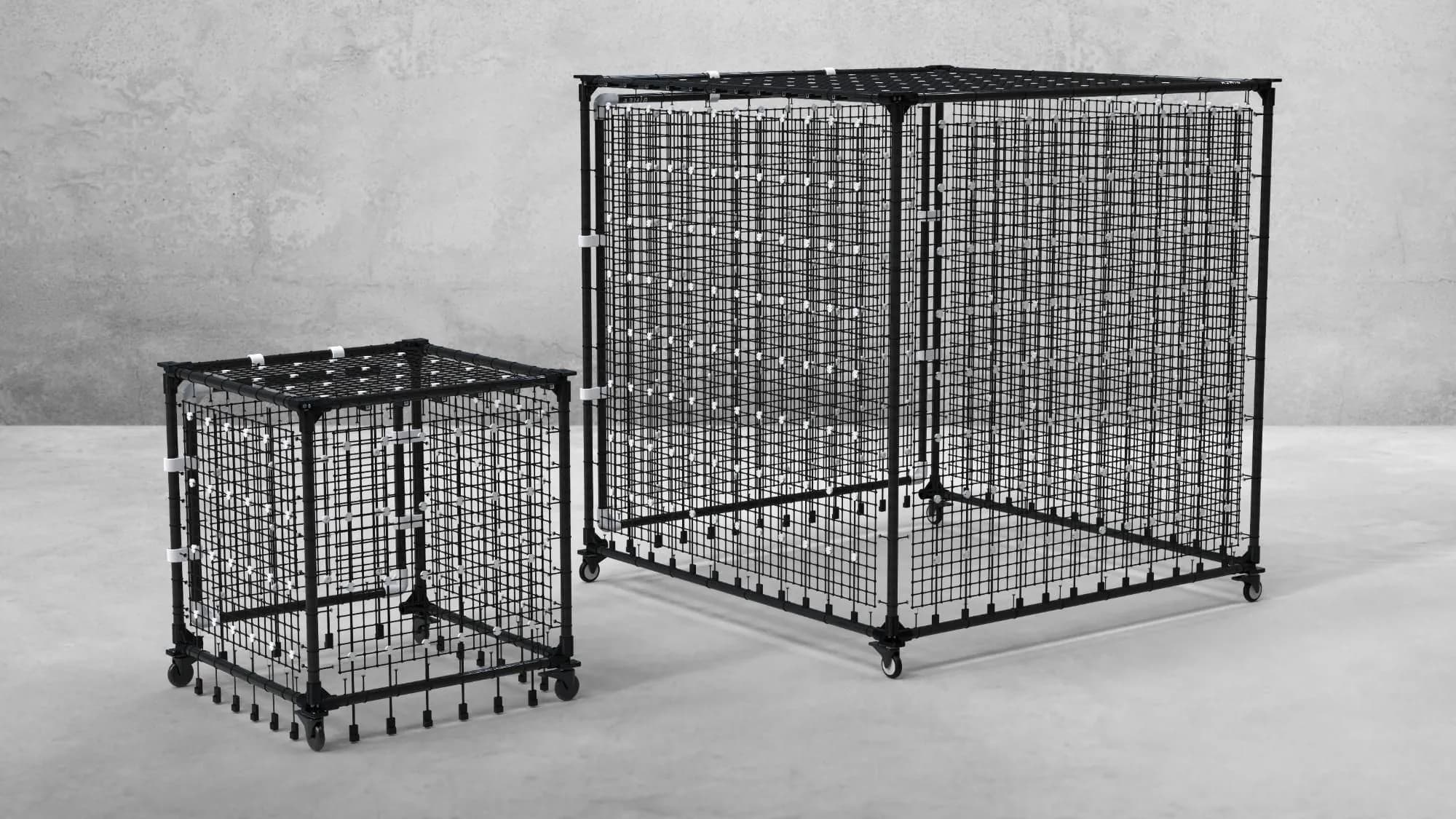
Three kit structures built around modules of 8 microphones: two cubes to locate in every direction, and a planar array for front-facing imaging.
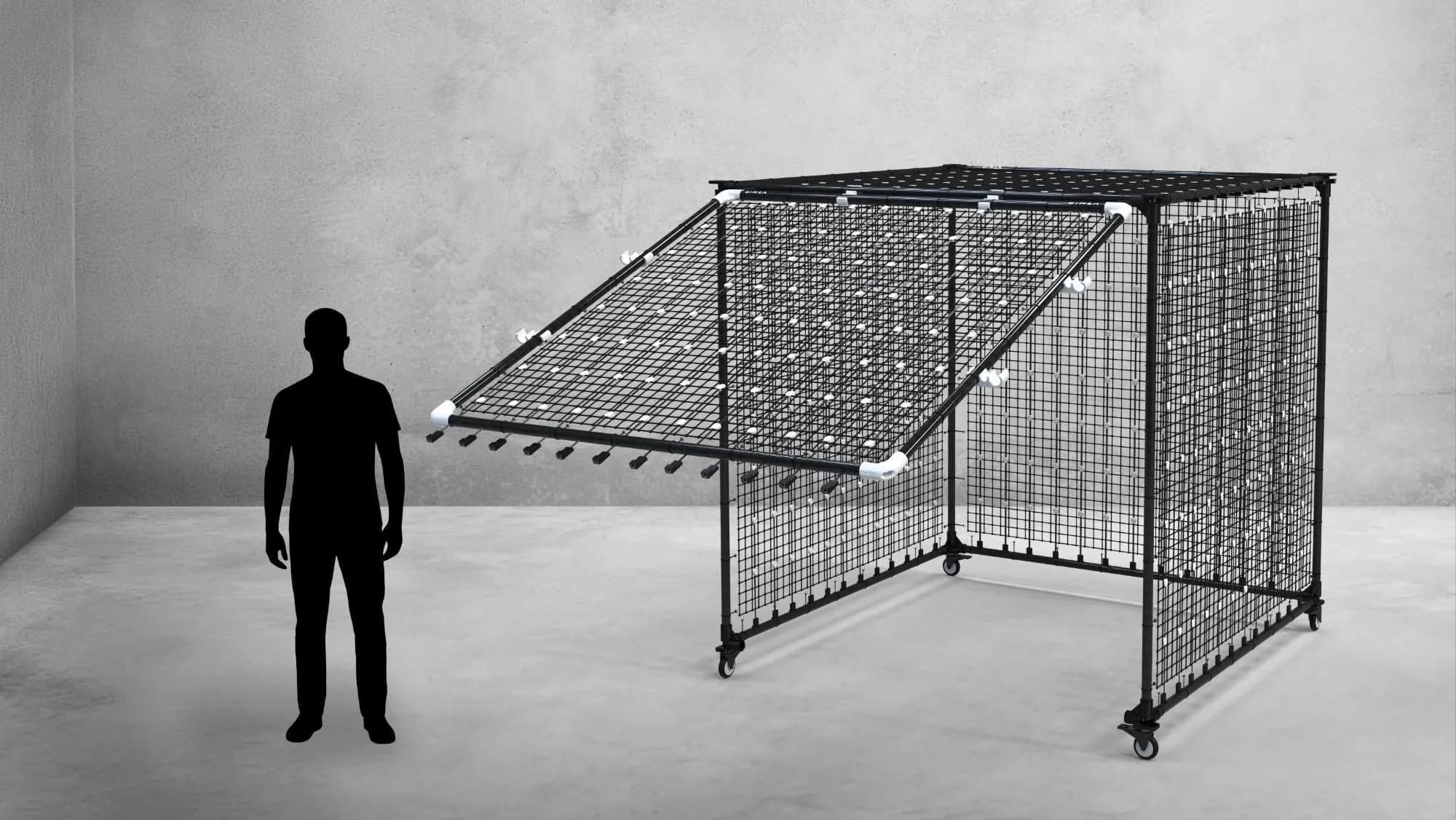
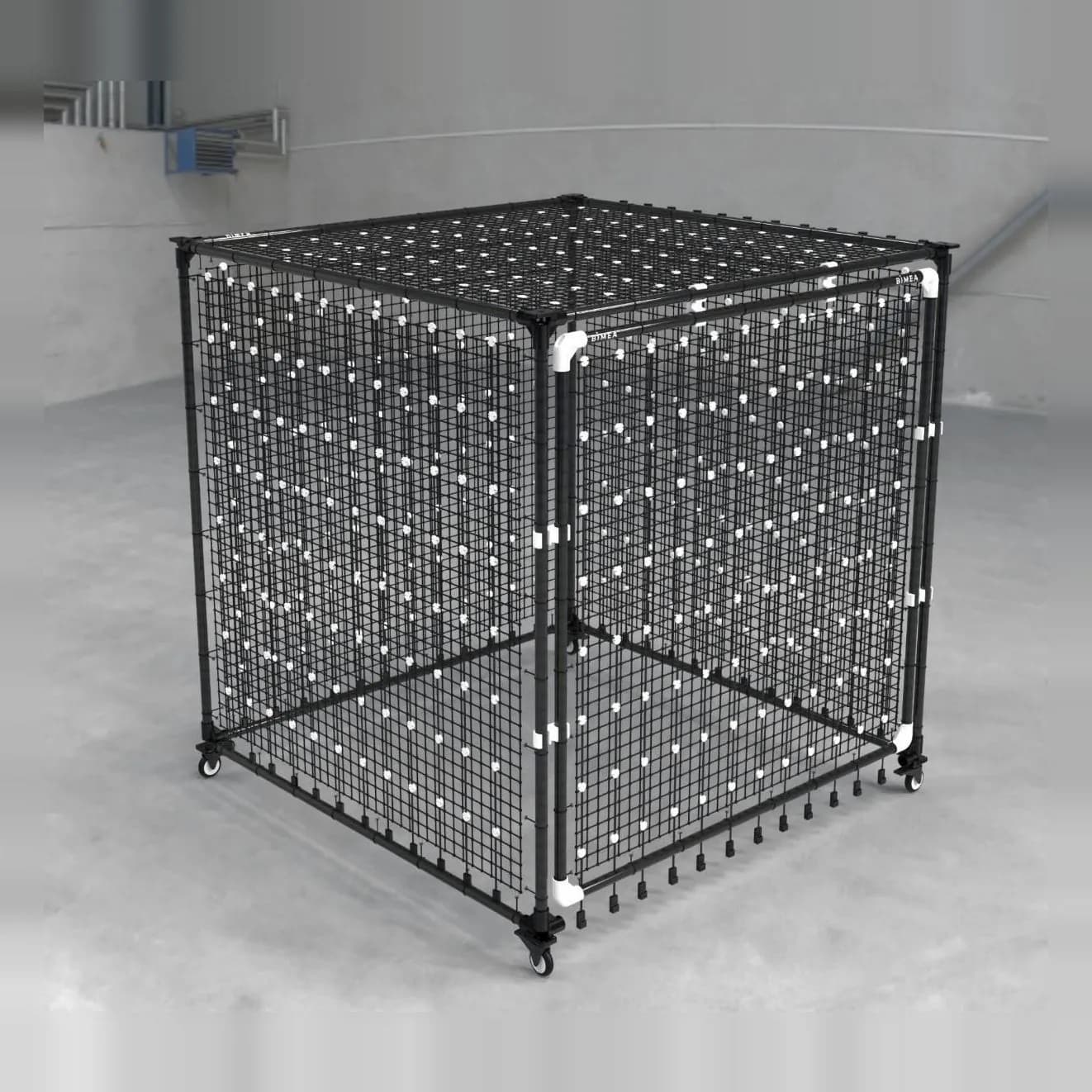
480 synchronous microphones
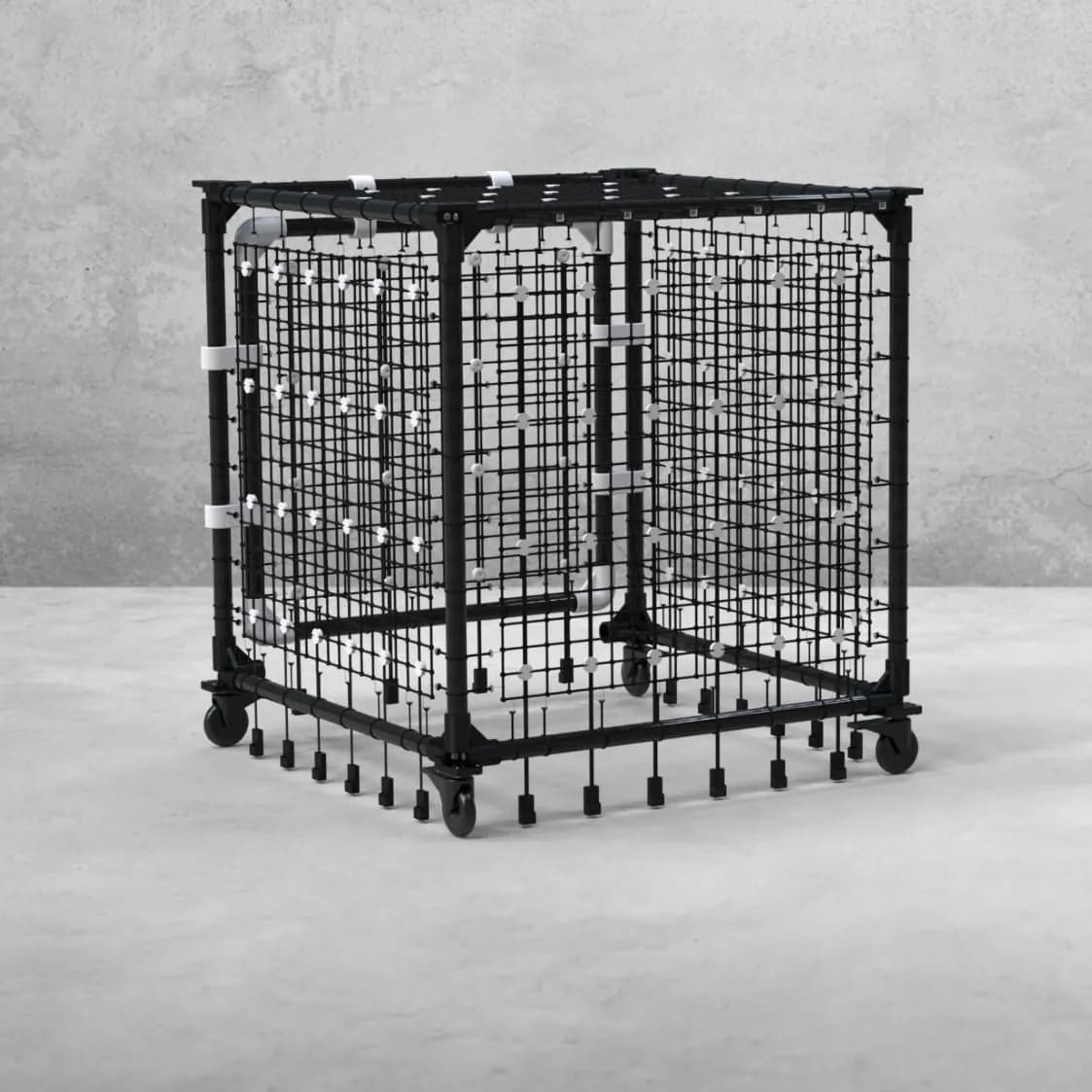
120 synchronous microphones
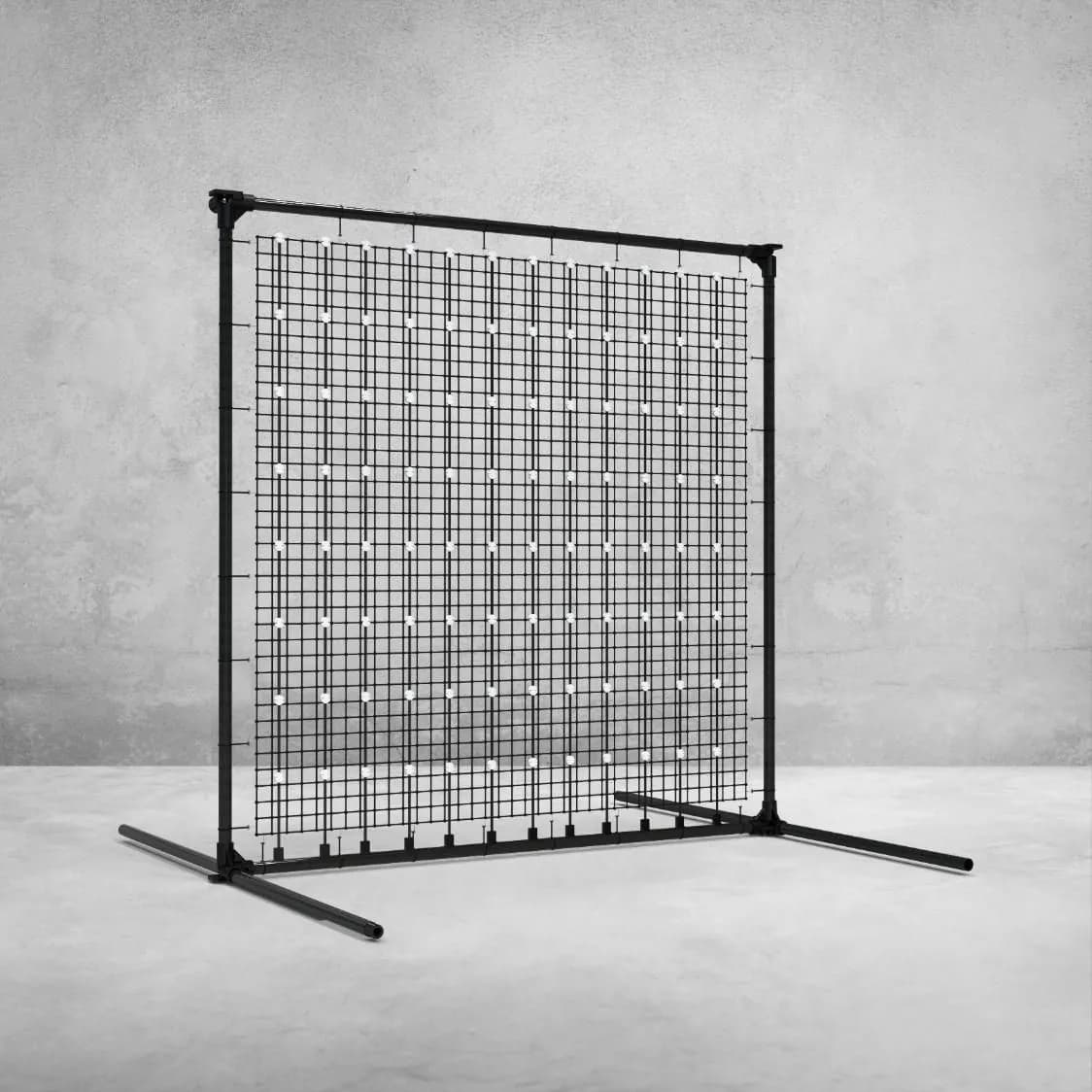
96 synchronous microphones
Carbon-fibre tubes, printed fittings and a net that holds the microphones: the structure goes up, comes down and moves.
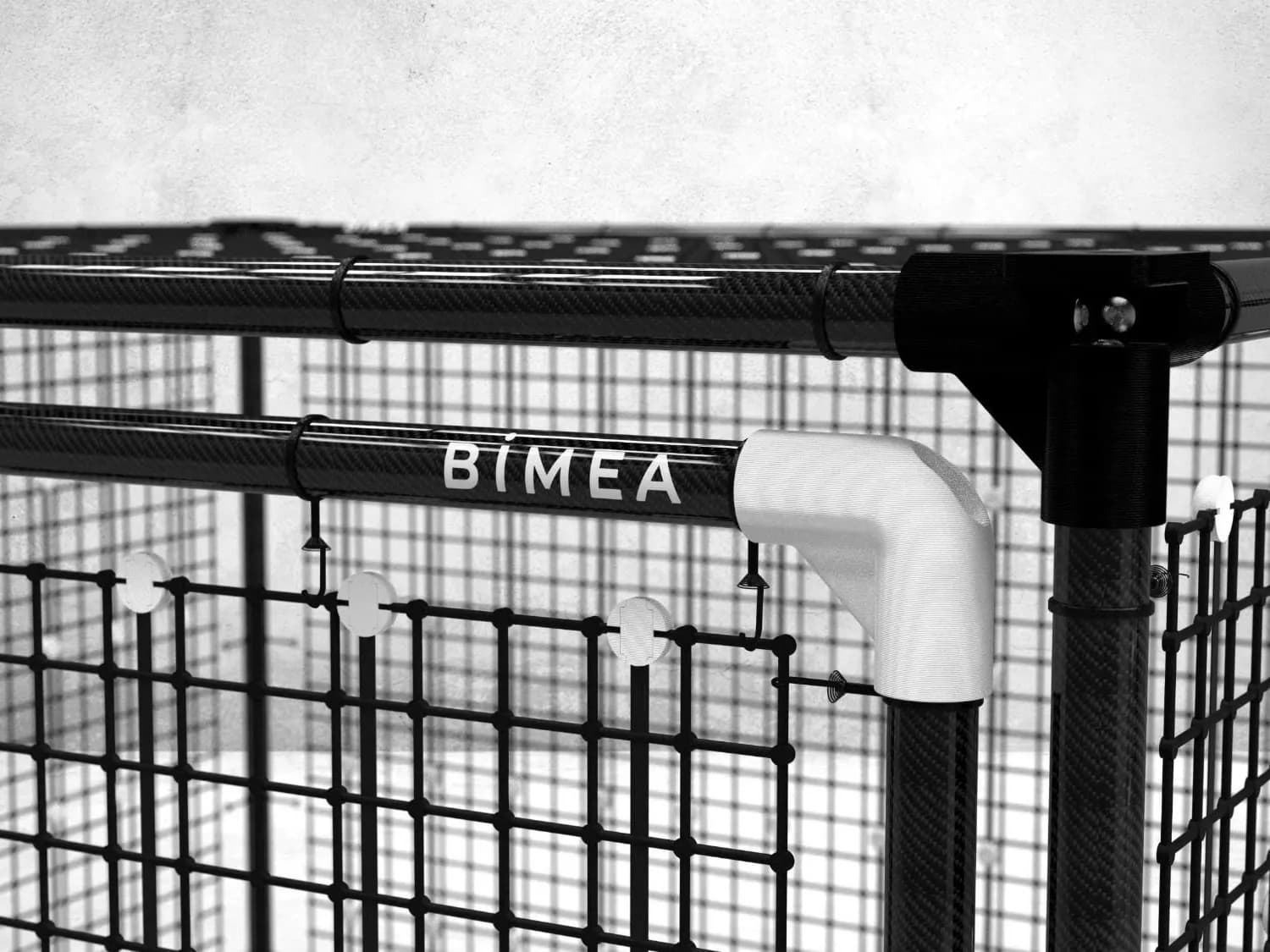
Unlike acoustic cameras with a fixed geometry, Mµ comes as a construction kit or as a turnkey array designed with you: channel count, shape, aperture and enclosure.
Linear, planar, circular, cubic or spherical, spanning up to ~20 m.
Array built into a sealed enclosure for on-site installation.
A camera on the array to overlay the acoustic map on the video image.
Compact arrays and circuits designed on request.
Modules, bars and mounts to assemble your own array.
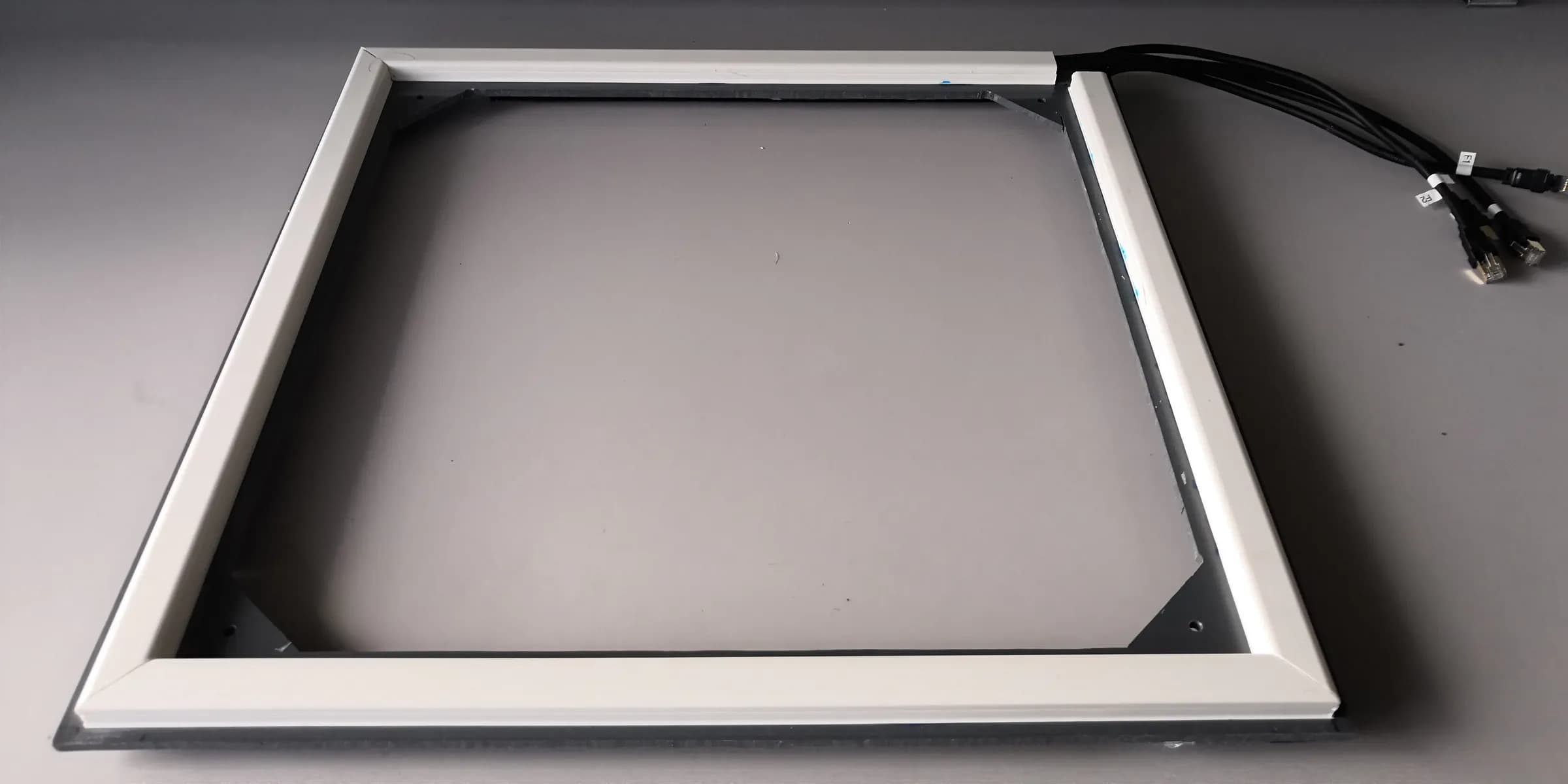
Wall-pressure measurements for aeroacoustic testing.
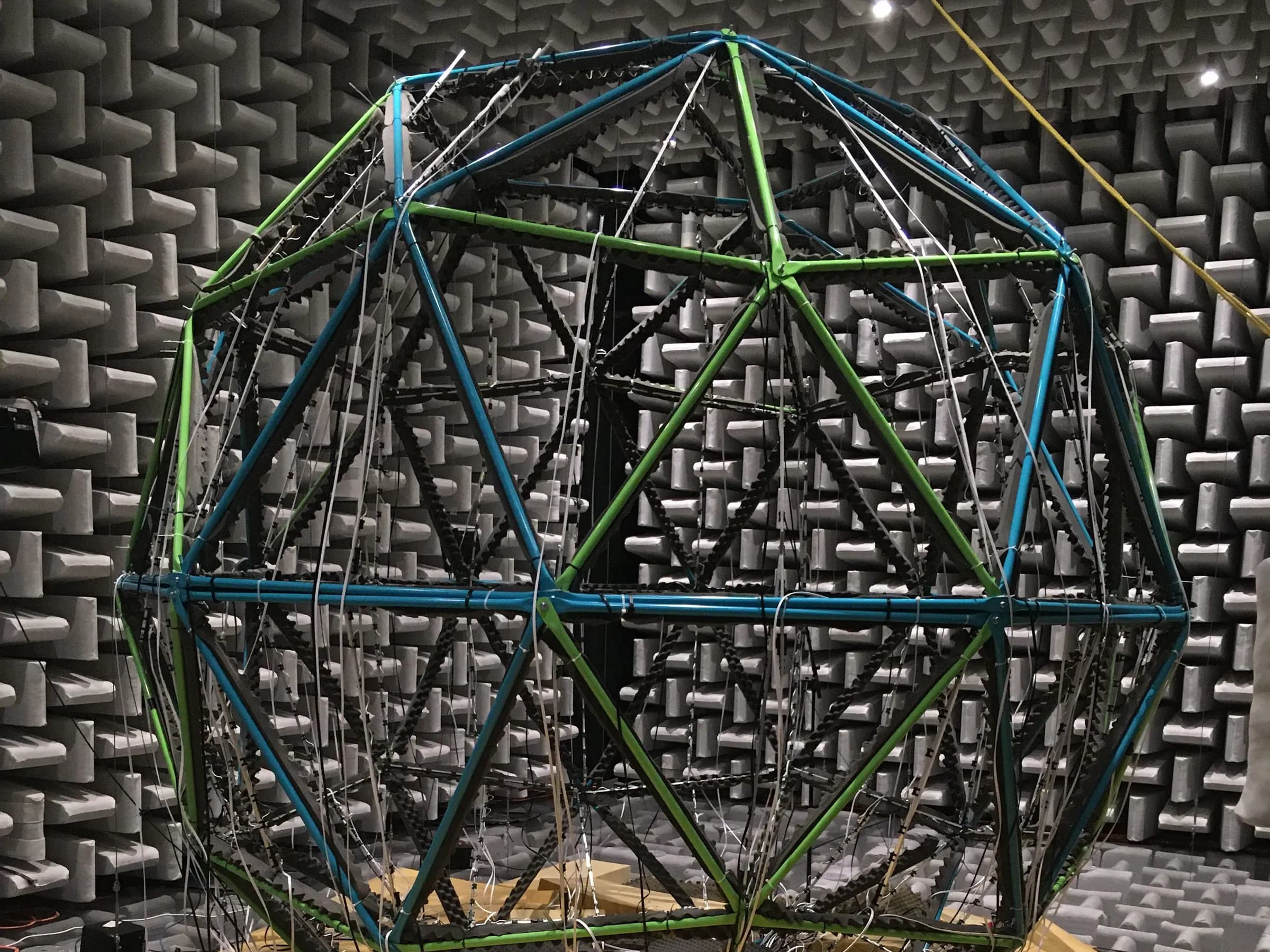
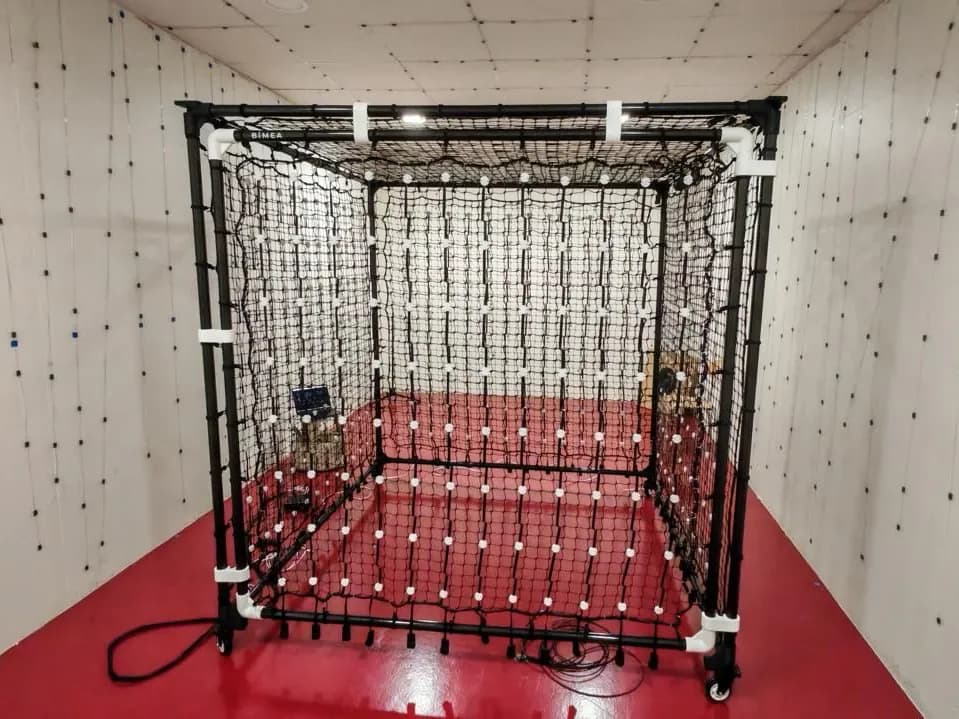
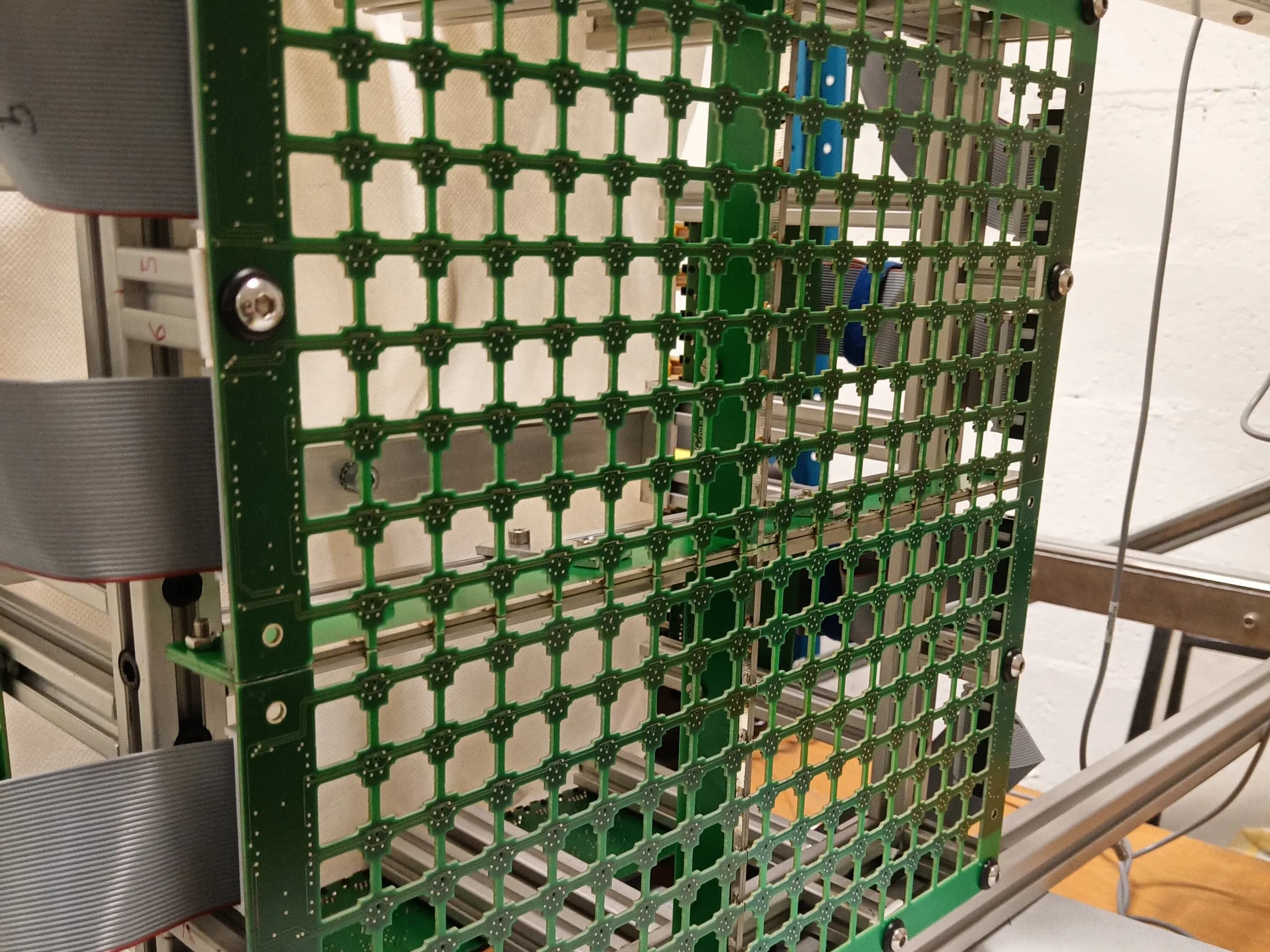
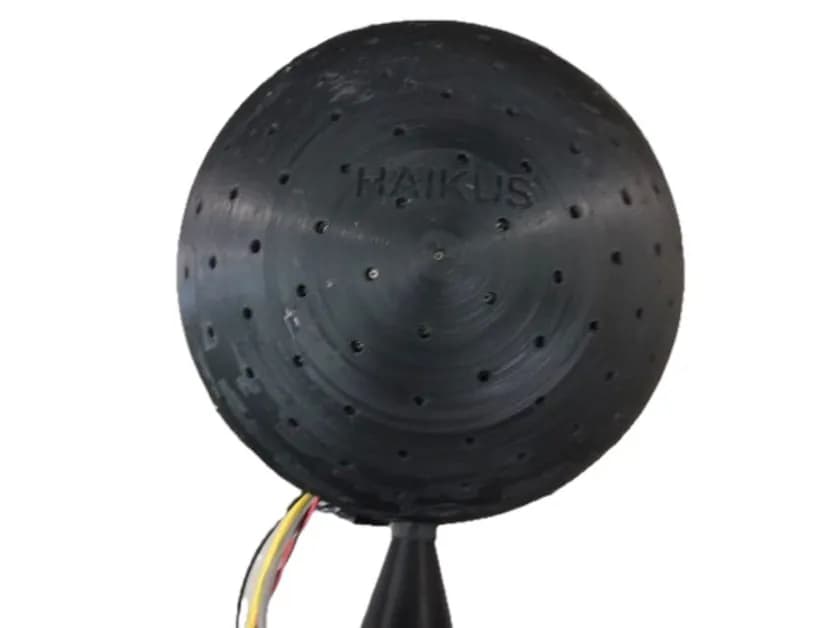
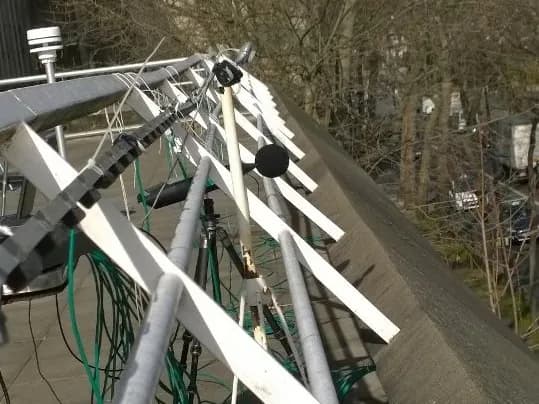
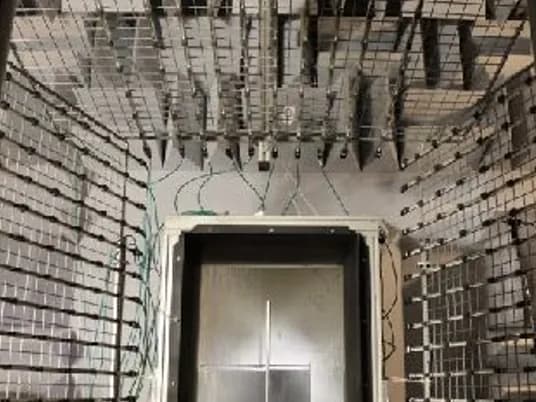
5 custom arrays already delivered
Windows, Linux, macOS. Included in the package.
Application-specific AI analysis modules are under development.
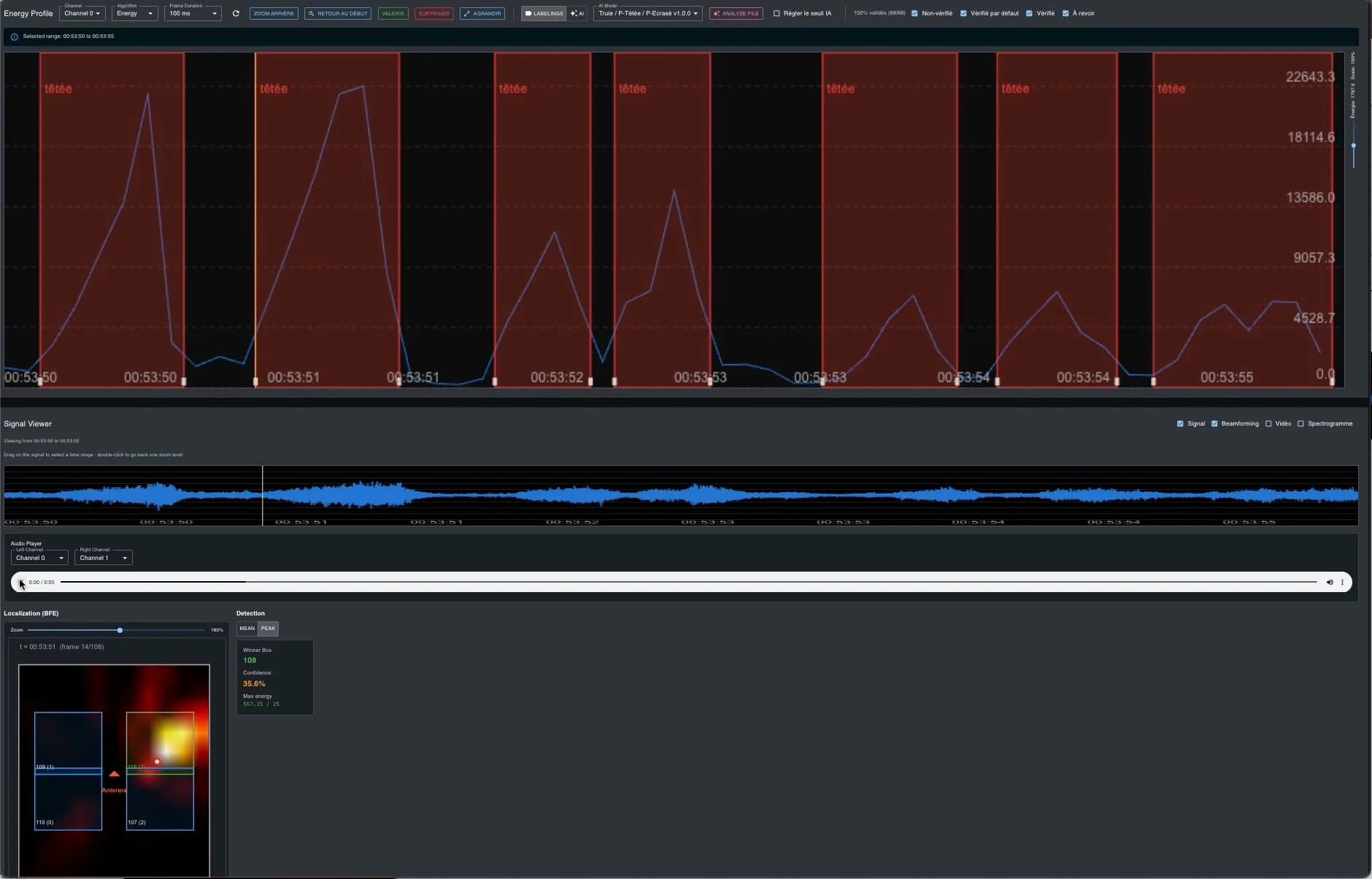
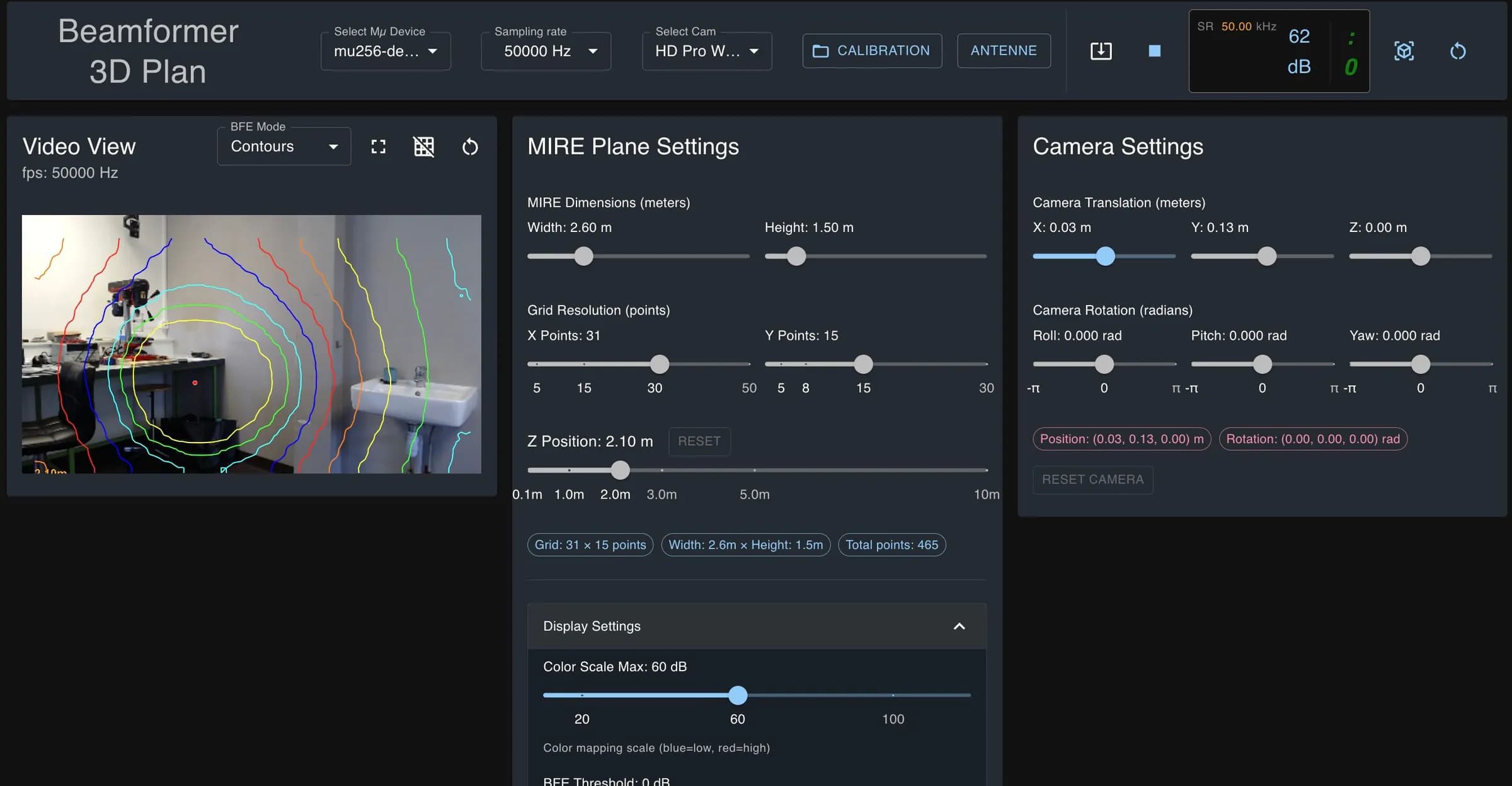
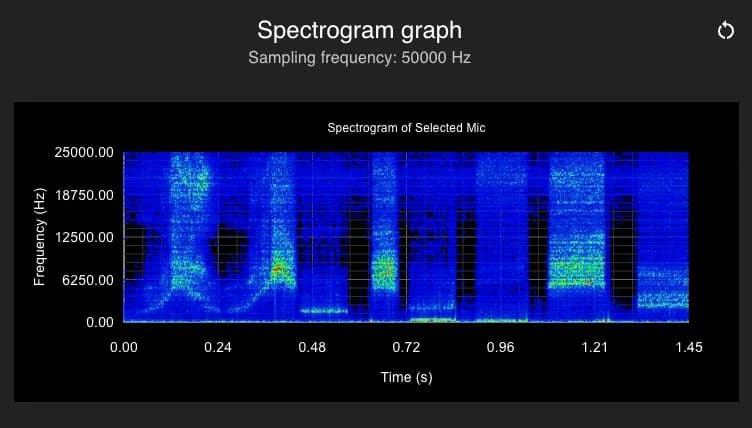
Raw signals from every channel, in an open, documented format: your processing stays in your hands.
Pricing on request.
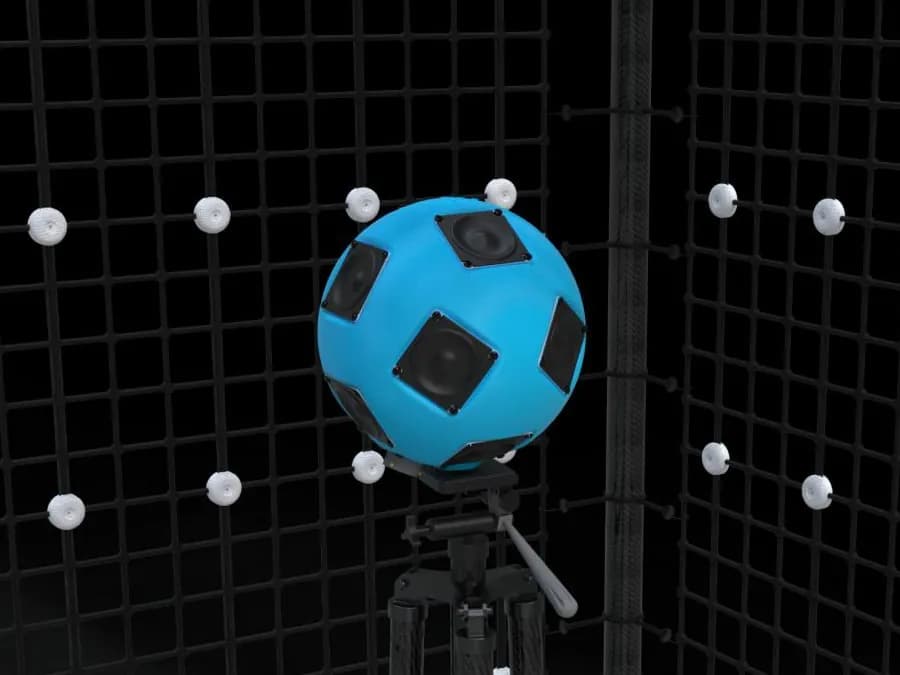
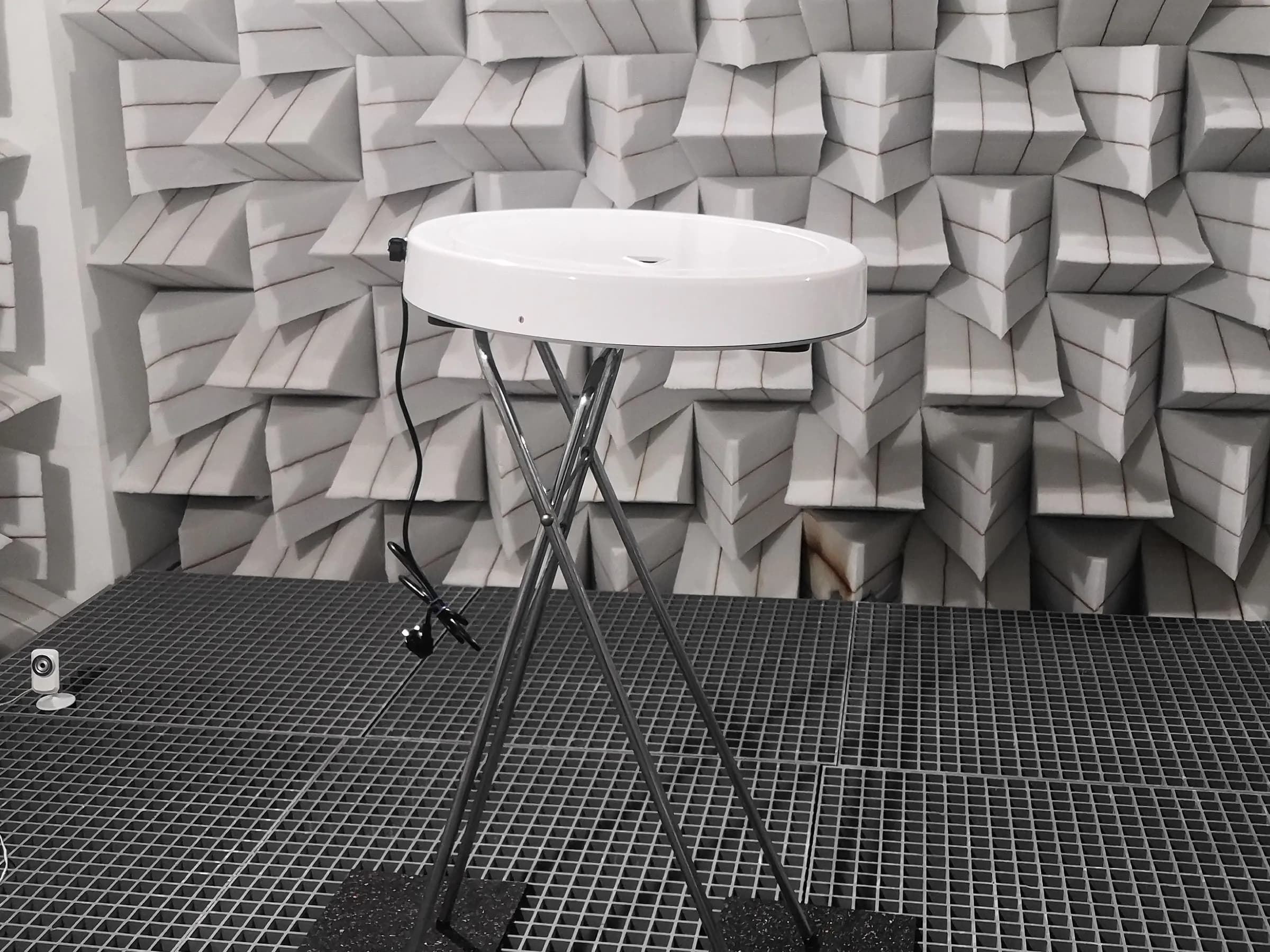
Omnidirectional source with 12 independent channels (12 × 4 W) and a programmable signal generator, synchronizable with Mµ systems. For calibration, sound power and time-of-flight measurements.
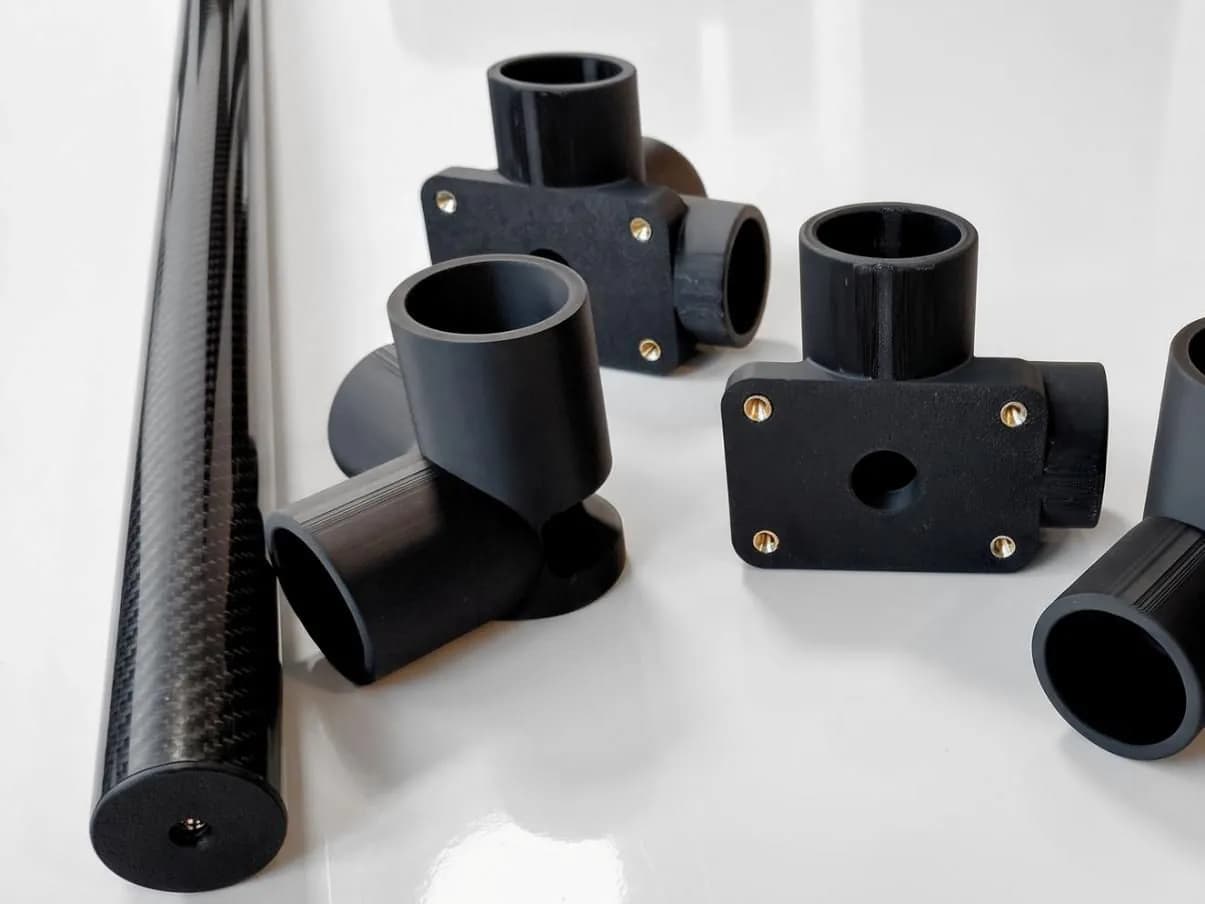
Carbon-fibre tubes, printed fittings, aluminum bars up to 1.5 m, MEMS mounts and ribbon cables, for linear, planar or cubic arrays.
8 MEMS microphones over 45 cm with an RJ45 connector, to extend an array or build linear arrays section by section.
All the technical documentation is on readthedoc.bimea.io.
Open the documentation (opens in a new tab)It depends on the frequencies and distances involved: the larger the array, the lower it reaches in frequency; the more microphones, the sharper the image. The Technology page explains these criteria, and our acousticians will size the array with you — just request a quote.
Yes. Every channel is recorded in an open binary format that Matlab or Python can read, and the Python SDK is open and programmable. No black box: you get access to the low-level data stream.
MµBoard runs on Windows, Linux and macOS.
The concentrator, RJ45 and USB 3 cables, MEMS microphones mounted in modules, MµBoard software and the Python library: everything you need to build an array and run your first acquisitions.
Yes, that's our specialty: geometry, channel count, aperture, waterproof enclosure, built-in camera or wind tunnel instrumentation. Tell us about your project.
Listed prices are education & research prices. For industrial customers, we quote based on the configuration.